Sunframe-Logo

Facade System Types Comparison: How Different Building Enclosure Systems Work

Introduction

Facade systems are often discussed as if they are mainly visual design choices. In real projects, appearance is only a small part of the decision.

Each facade system is a response to structural constraints, climate demands, construction sequencing, and long term building operation.

A glass facade, an aluminum cladding system, and a ventilated panel facade all belong to the building envelope category, but differ in their physical expression and engineering logic.

In practice, they respond differently to wind load, thermal movement, water exposure, and maintenance requirements.

For this reason, facade type selection is closer to system engineering than surface design.

Facade system types

How Facade Systems Are Actually Differentiated

Facade classification is not strictly standardized across the industry. Facade system classification is based on functional behavior within the building envelope rather than appearance or material alone.

A practical way to understand facade types is to evaluate them through four key aspects:

  • How the enclosure is supported by the structure
  • How water and air are controlled
  • How thermal movement is managed
  • How components are assembled and installed

Material alone does not define a facade system. The same material can be used in different systems depending on its structural role and installation logic.

For example, glass can be used in curtain wall systems, window wall systems, or double skin facade systems. In each case, its behavior within the envelope is different, even if the material appears similar.

Using these criteria, facade systems can be organized into several primary types used in contemporary building envelopes.

Facade System Types

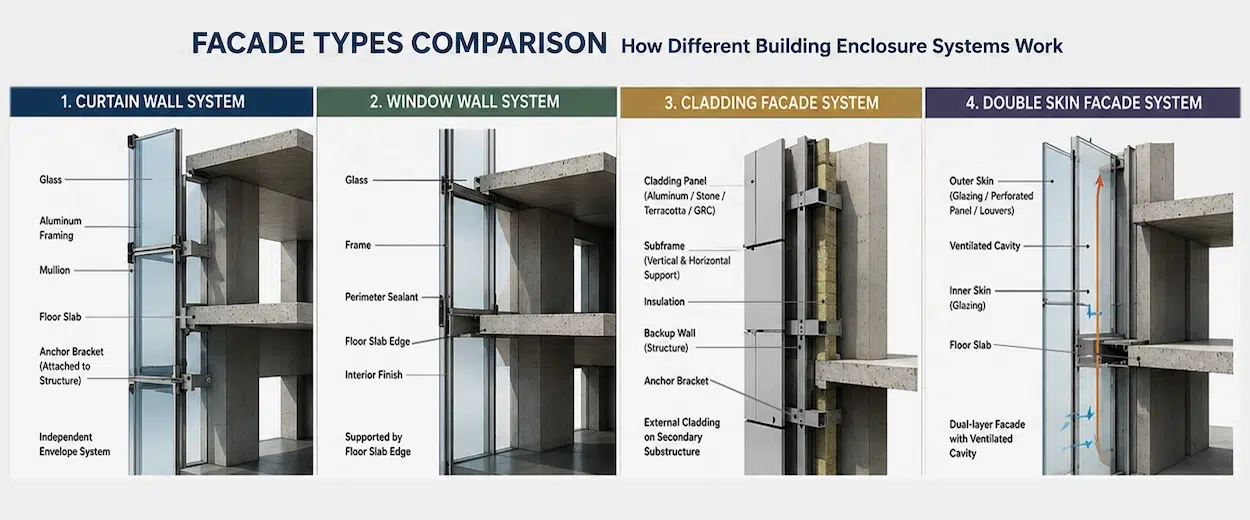
1. Curtain Wall System

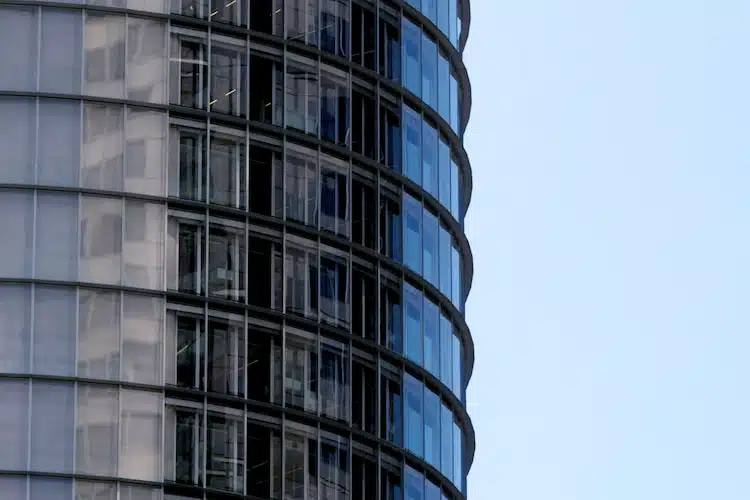
A curtain wall is a non structural exterior wall attached to the building frame. It does not carry floor loads and works as an independent envelope layer.

Typical composition includes aluminum framing, glass panels, metal infill, gaskets, and anchoring brackets.

Key characteristics

  • Detached from structural load bearing function
  • Suitable for high rise and large span facades
  • Allows continuous glass surfaces
  • Requires precise movement and waterproofing design

Curtain wall systems are widely applied in commercial towers, airports, and large scale developments where transparency and facade continuity are important.

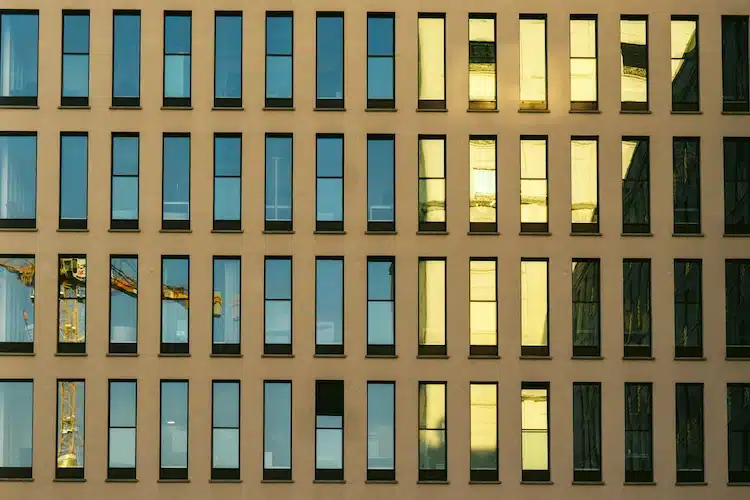
Facade System Types -Curtain wall system

2. Window Wall System

Window wall systems are installed between floor slabs and rely on slab edges for support. The facade is constructed floor by floor, creating a segmented exterior rhythm.

Key characteristics

  • Integrated with floor slab structure
  • Faster installation compared to curtain wall systems
  • Common in residential high rise buildings
  • Easier installation sequencing

Limitation

Facade continuity is reduced because slab edges remain visible from the exterior, which affects the overall architectural appearance.

Facade System Types - Window Wall System

3. Cladding Facade System

Cladding systems form an outer layer fixed to a supporting substructure. The structural wall behind provides insulation and environmental separation.

Common materials include aluminum panels, stone, terracotta, fiber cement, and GRC or GFRC panels.

Key characteristics

  • High flexibility in material expression
  • Strong control over architectural texture and depth
  • Compatible with insulated wall assemblies
  • Applicable to both solid and mixed facade compositions

Engineering note

Cladding systems can be designed as either sealed systems or ventilated rainscreen systems depending on performance requirements.

In ventilated configurations, a cavity is introduced behind the outer cladding layer to improve moisture drainage and pressure equalization. This improves long-term durability in many environmental conditions.

GRC and GFRC are frequently used in cladding systems due to their ability to form complex shapes while maintaining structural stability as panelized elements.

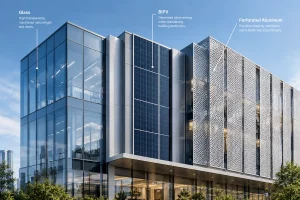
Facade System Types - Cladding facade system

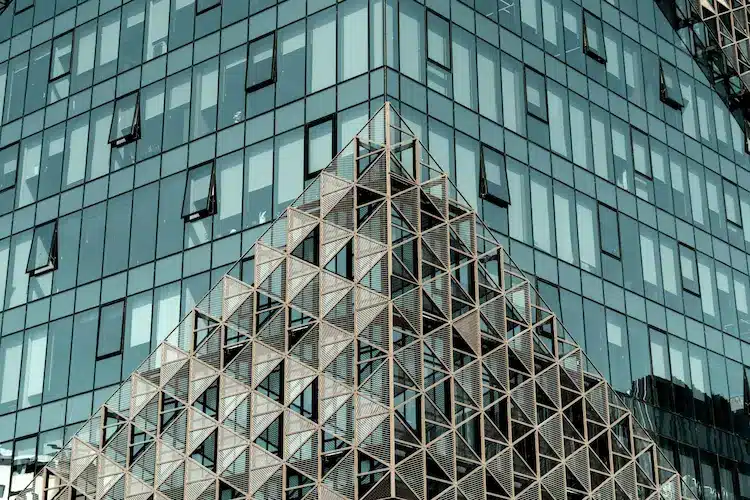
4. Double Skin Facade System

A double skin facade consists of two independent facade layers separated by an intermediate air cavity. This cavity can be naturally or mechanically ventilated depending on design intent.

Key characteristics

  • Improves thermal buffering between indoor and outdoor environments
  • Enhances acoustic performance
  • Allows controlled solar gain management
  • Supports energy reduction strategies in specific climates

Limitation

System complexity increases significantly. Fire safety coordination, airflow control, and maintenance access require detailed design integration.

Double skin systems are typically used in high-performance buildings with specific environmental control requirements, rather than standard commercial projects.

Facade System Types - Double Skin Facade System

Facade Systems Comparison

System

Structural Role

Installation Logic

Water Control Strategy

Typical Application

Curtain wall

Non-load-bearing external envelope independent from primary structure

Stick-built, unitized or semi-unitized framing systems

Pressure-equalized, drained, or face-sealed façade systems with multi-layer gasketed and sealed joints

Commercial high-rise, office towers, airports

Window wall

Non-structural facade supported at slab edges

Floor-by-floor installation between slabs

Perimeter sealed system with slab interface detailing and limited drainage reliance

Residential high-rise, mid-rise buildings

Cladding system

External envelope layer supported by secondary subframe

Panelized or cassette systems fixed to structural backup wall

Barrier or drained system depending on detailing; may incorporate ventilated rainscreen cavity

Institutional, educational, mixed-use buildings

Double-skin facade

Dual-layer enclosure system separated by ventilated buffer zone

Outer and inner facade layers constructed as coordinated systems

Controlled airflow cavity managing heat, moisture, and solar gain

Sustainable and landmark architecture

How Facade Selection Actually Happens

Facade decisions are rarely based on a single factor. Most projects balance multiple constraints at the same time.

Key drivers include:

  • Building height and structural system
  • Climate and exposure conditions
  • Budget and lifecycle cost
  • Construction speed requirements
  • Local labor capability
  • Energy performance targets
  • Maintenance strategy

These factors often influence facade system selection at a project level, and different systems may be used across different parts of the same building.

Hybrid Facade Design in Modern Projects

Modern buildings frequently integrate multiple systems.

Examples include:

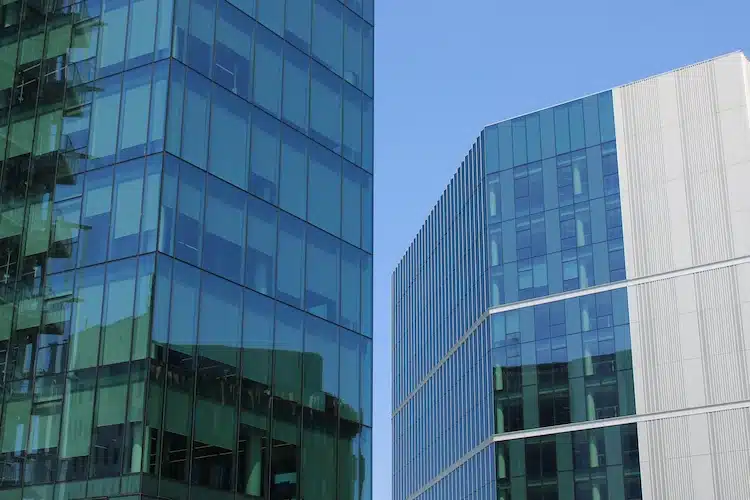
  • Curtain wall combined with metal cladding
  • Rainscreen facade with glazed curtain wall zones
  • Window wall systems combined with precast panels
  • Cladding systems integrated with shading devices

This approach allows different facade systems to address different performance requirements within the same building.

Conclusion

Facade systems differ mainly in how they manage structural independence, moisture control, thermal behavior, and installation logic.

Curtain walls, window walls, cladding systems and double skin systems represent different strategies for enclosing a building rather than different visual styles.

A clear understanding of these systems improves coordination between design intent, engineering constraints, and construction execution, especially in complex building projects where facade performance directly affects long term building behavior.

Related Facade Topics

Work With SunFrame on Your Next Facade Project

If you are planning a residential, commercial, or infrastructure facade project and require curtain wall engineering, system development, or installation support, SunFrame can assist from early design coordination to project execution — helping ensure reliable, well-engineered facade performance throughout the building lifecycle.

Leave a Reply

Your email address will not be published. Required fields are marked *

This site uses Akismet to reduce spam. Learn how your comment data is processed.

Other Posts

Contact Us