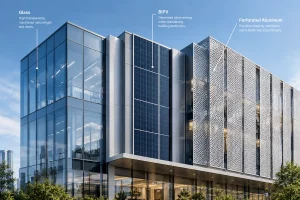
Façade–Structure Interface: Why Do So Many Problems Start Here?
Façade–Structure Interface: Why Do So Many Problems Start Here? Introduction The façade–structure interface is where façade design meets the actual conditions of the building structure.
A façade supplier is often contacted when a project is ready to request quotations. However, meaningful discussions often begin before the quotation stage, once the project has enough information for technical evaluation.
From façade system selection and design coordination to cost planning and technical decisions, supplier involvement at different project stages can lead to very different outcomes.
Knowing when to involve a façade supplier helps project teams make better decisions before key choices become difficult to change.
Project decisions become progressively more difficult to change as design and construction move forward.
Early in a project, decisions remain relatively flexible. As the project progresses, more of those decisions become fixed, leaving fewer opportunities to influence the final outcome.
This makes the timing of supplier involvement an important part of effective project planning.
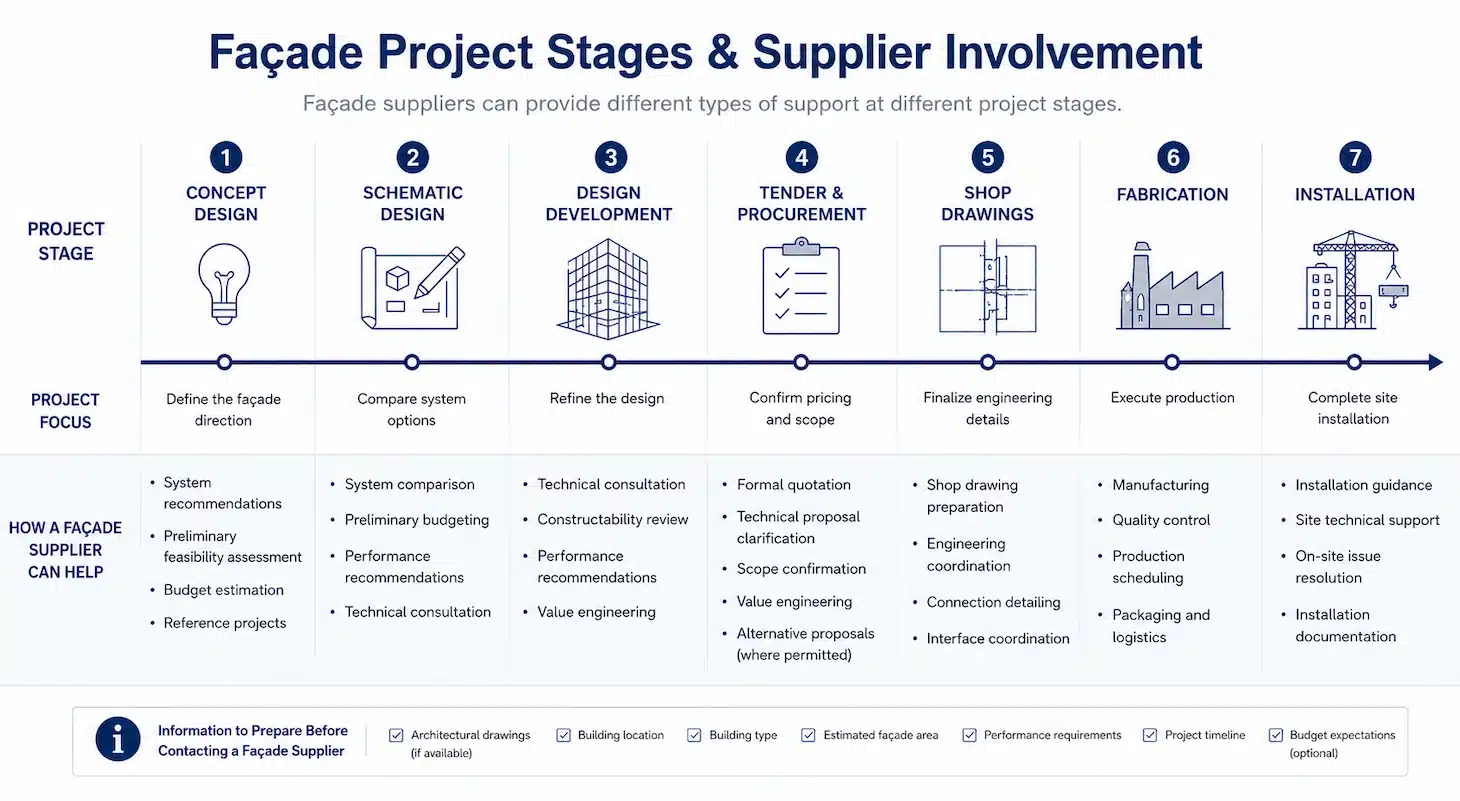
Project Stage | Typical Project Focus | Supplier Value |
Concept Design | Define the façade direction | Early technical guidance |
Schematic Design | Compare system options | System recommendations |
Design Development | Refine the design | Engineering support |
Tender & Procurement | Confirm pricing and scope | Quotation & technical clarification |
Shop Drawings | Finalize engineering details | Detailed engineering |
Fabrication | Execute production | Manufacturing & quality control |
Installation | Complete site installation | Technical support |
Once the architectural concept begins to take shape, early discussions with a façade supplier can help define the façade direction before major technical decisions become fixed.
Early discussions help assess different façade approaches and establish realistic budget expectations.
How a Façade Supplier Can Help
The building form and façade concept are becoming clearer, and different systems are being evaluated.
Engineering input at this stage helps compare different systems, refine design options, and reduce the need for revisions during later stages.
How a Façade Supplier Can Help
The façade design is becoming more detailed, but important technical decisions can still be refined before tendering.
This is often the most valuable stage for supplier involvement. Engineering collaboration at this stage can improve constructability, optimize system details, and identify potential issues before they become costly to change.
How a Façade Supplier Can Help
The project is ready to invite suppliers to submit technical proposals and quotations.
This stage is used to review quotations, clarify technical proposals, and confirm project requirements before moving into detailed engineering or production.
How a Façade Supplier Can Help
The approved façade design is converted into detailed shop drawings for production.
Accurate coordination at this stage helps minimize manufacturing errors and site-related issues.
How a Façade Supplier Can Help
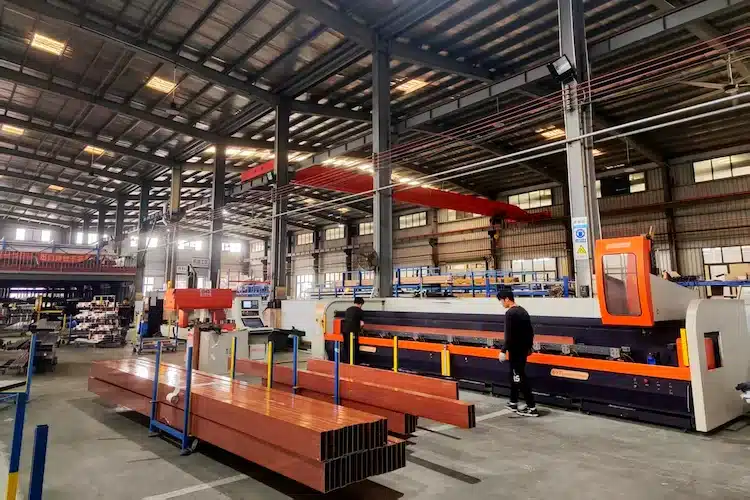
Once shop drawings are approved, the project moves into fabrication. Manufacturing quality, production scheduling, and timely delivery become the key priorities.
For international projects, packaging and logistics also play an important role in ensuring products arrive on site in the correct sequence and condition.
How a Façade Supplier Can Help
The installation stage requires accurate execution of the approved façade system on site.
Supplier support helps address site issues, provide technical guidance, and maintain installation quality.
How a Façade Supplier Can Help
Having basic project information available leads to more productive early discussions.
The more information available, the more accurate the technical recommendations and budget estimates can be.
Supplier involvement creates different value at different stages of a project.
Understanding when and how to engage a façade supplier allows project teams to make more informed decisions, improve coordination, and support better project outcomes.
Every project follows a different timeline. At SunFrame, we collaborate with developers, architects, contractors, and consultants at different project stages, providing technical, engineering, and manufacturing support tailored to each project’s specific requirements.
If you are planning a residential, commercial, or infrastructure facade project and require curtain wall engineering, system development, or installation support, SunFrame can assist from early design coordination to project execution — helping ensure reliable, well-engineered facade performance throughout the building lifecycle.

Façade–Structure Interface: Why Do So Many Problems Start Here? Introduction The façade–structure interface is where façade design meets the actual conditions of the building structure.

Beyond Construction Volume: The Future of Façade Industry Growth Introduction For decades, growth in the façade industry has been closely tied to construction volume. More

5 Overlooked Risks During Unitized Curtain Wall Hoisting Introduction Unitized curtain wall hoisting is a critical stage where factory-fabricated panels are installed into their final

Aluminum Profiles in Façade Systems: Why Similar Profiles Perform Differently Introduction When evaluating a façade system, aluminum profiles are often a key component that influences