- Integrating Solar Energy into Modern Architectural Design
What Is a Luminous Facade?
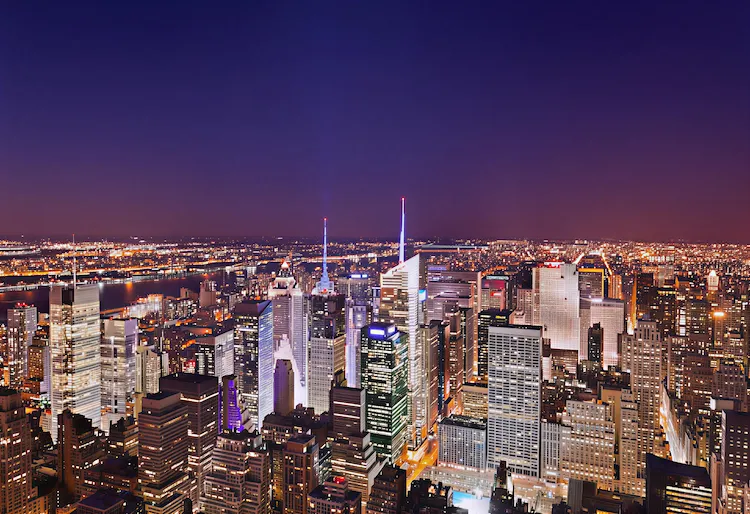
Can you imagine a city at night without any light? The result would be that most buildings fade into invisibility. This shows just how crucial light is for our architecture.
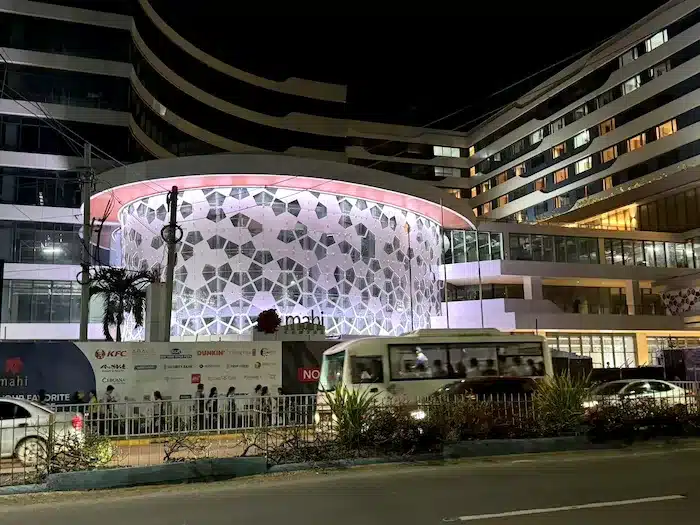
It is the light that shapes the buildings and reveals their textures. Moreover, it also gives rhythm, emotion, and life to the skyline. With embedded LEDs, linear channels, pixel modules, backlit glass, or translucent materials, a luminous façade brings the building to life. Its form and illumination merge, highlighting the building’s true character after dark.
Core Categories & Lighting Methods
Architectural Lighting Integration
Light integrates with façade structure, emphasizing geometry, lines, and massing.
External Linear Lighting
LEDs hidden in mullions, columns, cornices, or metal channels.
At night, the Mashrabiya aluminum lattice curves glow along linear LED channels embedded in the profiles. Each curve lights up on purpose, giving the tower a signature look on Doha’s skyline.
Tech Insight: The curved aluminum profiles hide LED channels, spreading smooth, glare-free light across the façade.
Linear LEDs within aluminum channels create soft sweeps and fading sequences, animating the façade. Traditional Mashrabiya patterns merge with modern light choreography, shaping rhythm and presence.
Tech Insight: Programmable RGBW LEDs enable gradient and directional control.