Sunframe-Logo

5 Overlooked Risks During Unitized Curtain Wall Hoisting

Introduction

Unitized curtain wall hoisting is a critical stage where factory-fabricated panels are installed into their final positions within the building structure.

Although the process is highly standardized, overlooked details during lifting, positioning, and coordination can affect installation accuracy, façade performance, and project efficiency.

This article highlights five commonly overlooked risks during unitized curtain wall hoisting and explains why they require careful control.

Unitized Curtain Wall Hoisting

1. Insufficient Pre-Hoisting Inspection

Before lifting a unitized curtain wall panel, a thorough inspection should be carried out to confirm that the panel is ready for installation.

Key inspection items include:

  • Aluminum frame condition
  • Glass surface and edge protection
  • Gasket position and continuity
  • Connection components and accessories
  • Surface protection materials

During transportation, storage, and handling, panels may experience minor damage or displacement that can affect installation quality if not identified before hoisting.

Common overlooked issues include:

  • Damaged protective films that affect surface appearance
  • Displaced or improperly positioned gaskets that reduce sealing performance
  • Loose connection components that require adjustment during installation
  • Minor frame deformation caused by improper handling

Once a damaged or misaligned panel is lifted into position, correction becomes more difficult and may delay installation progress.

A proper pre-hoisting inspection ensures that each unit panel enters the installation stage in a controlled condition.

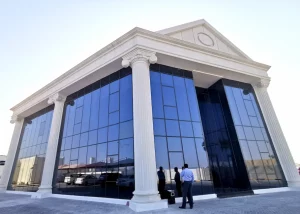
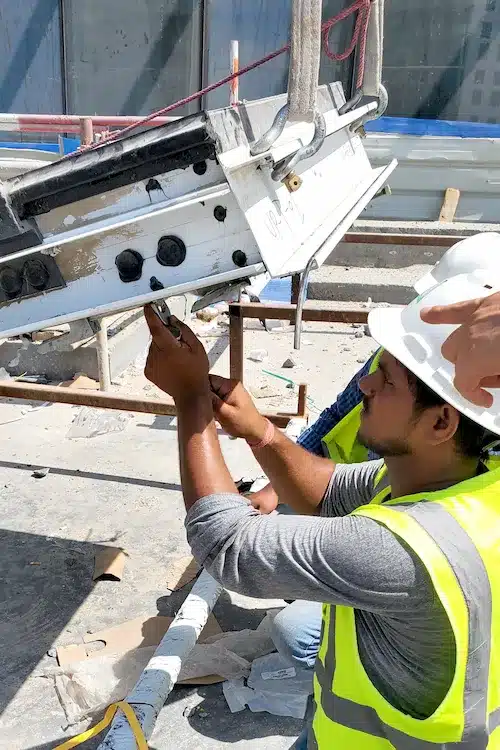
Curtain Wall Pre-Hoisting Inspection

2. Improper Load Distribution During Panel Hoisting

During hoisting, a unitized curtain wall panel is temporarily subjected to lifting forces that differ from its final installed condition.

Unlike the permanent load transfer after installation, lifting loads are concentrated through specific lifting points and connection areas. If the load distribution is not properly controlled, additional stress may be introduced into the panel structure.

Potential consequences include:

  • Temporary deformation of aluminum frames
  • Excessive stress at lifting points or connection areas
  • Temporary distortion of panel geometry during lifting
  • Difficulty achieving accurate positioning during installation

To minimize these risks, lifting points, hoisting equipment, and handling methods should be selected based on the panel dimensions, weight distribution, and site conditions.

Proper load control during hoisting helps maintain panel stability and supports accurate installation.

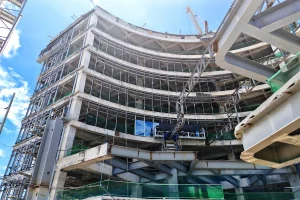
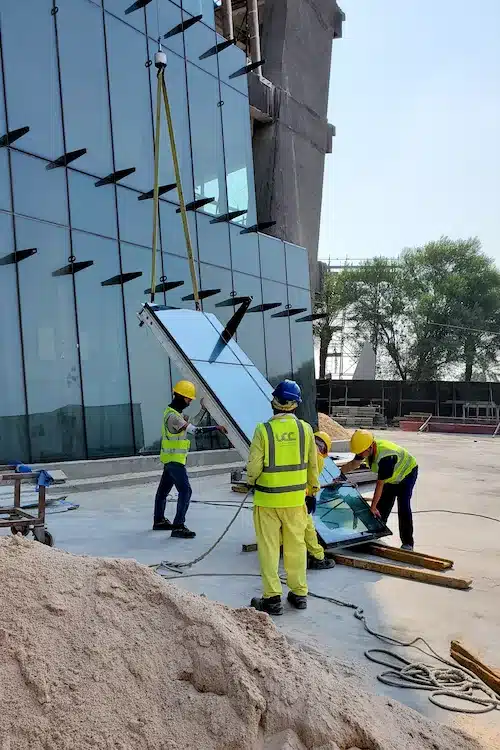
Curtain Wall Hoisting

3. Wind Influence During High-Rise Hoisting

Wind conditions can significantly affect the stability and positioning accuracy of unitized curtain wall panels during high-rise hoisting.

Due to their large dimensions and exposed position during lifting, unitized panels can be highly sensitive to wind forces before they are fully connected to the building structure.

Unexpected wind movements may cause:

  • Panel rotation during lifting
  • Difficulty controlling panel position
  • Collision risks with the building structure
  • Delays in installation operations

For high-rise façade projects, hoisting plans should consider weather conditions, wind limitations, lifting speed, and communication between the crane operator and installation team.

Effective coordination helps ensure that each panel reaches its designed position safely and accurately.

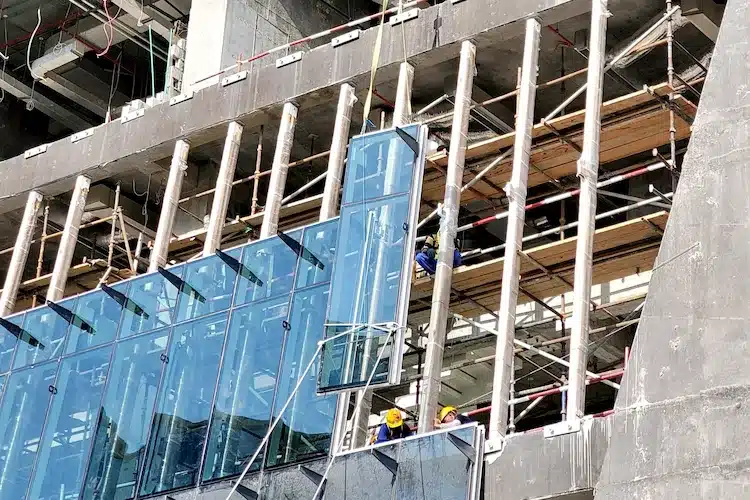
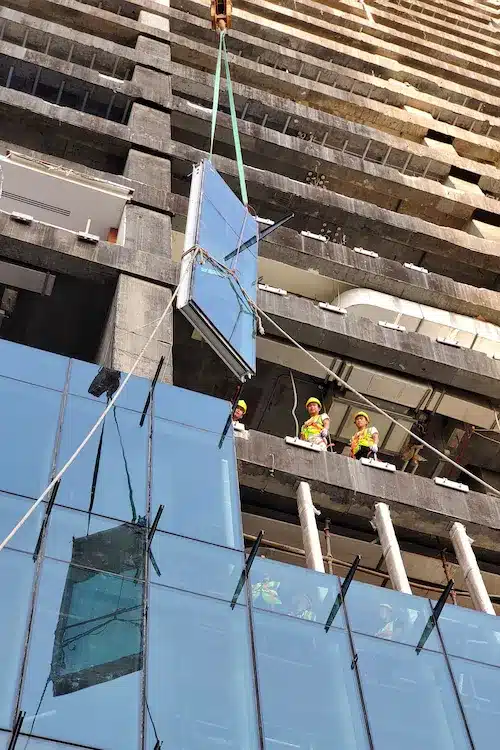
Unitized Curtain Wall Installation

4. Structural Tolerance and Connection Coordination

Unitized curtain wall panels rely on accurate coordination between the façade system and the building structure during installation.

However, actual site conditions may differ from design requirements due to structural tolerances.

Common challenges include:

  • Deviations in slab edges
  • Incorrect embedded component locations
  • Misalignment between brackets and connection points

These issues can affect:

  • Panel positioning
  • Joint consistency
  • Installation efficiency

Early verification of structural conditions and close coordination between structural and façade teams can minimize adjustment difficulties during hoisting.

5. Excessive Focus on Speed Instead of Accuracy

One of the main advantages of unitized curtain wall systems is faster installation. However, installation speed should always be balanced with precision control.

During the installation process, rushing the positioning and adjustment process may result in:

  • Uneven panel joints
  • Misalignment between adjacent units
  • Increased correction work at later stages

Each unit panel needs sufficient time for:

  • Position verification
  • Alignment adjustment
  • Connection confirmation

A faster installation process is only valuable when it maintains the intended façade performance and visual quality.

How Proper Hoisting Control Supports Façade Performance

Unitized curtain wall hoisting is more than a lifting operation. It represents the point where factory-controlled precision encounters the challenges of real construction environments.

Maintaining installation quality requires coordinated control across the entire project process, including:

  • Accurate fabrication
  • Proper transportation and handling
  • Reliable lifting methods
  • Structural coordination
  • Detailed installation inspection

When these factors are effectively managed, unitized curtain wall systems can achieve:

  • Consistent façade alignment
  • Reliable connection performance
  • Improved installation efficiency
  • Long-term weather resistance

Conclusion

A façade system is ultimately judged by its performance on site, not only by its design intent.

For unitized curtain wall projects, controlling overlooked details during the installation process is essential to turning engineering accuracy into a completed façade that performs as expected.

Unitized Curtain Wall Knowledge Series

Continue exploring our technical insights into unitized curtain wall systems.

01  Installation Guide

      ▷ Step-by-Step Site Process & Standards

02  Hoisting Risks

      ▶ 5 Overlooked Risks During Unitized Curtain Wall Hoisting

Work With SunFrame on Your Next Facade Project

If you are planning a residential, commercial, or infrastructure facade project and require curtain wall engineering, system development, or installation support, SunFrame can assist from early design coordination to project execution — helping ensure reliable, well-engineered facade performance throughout the building lifecycle.

Leave a Reply

Your email address will not be published. Required fields are marked *

This site uses Akismet to reduce spam. Learn how your comment data is processed.

Other Posts

Contact Us