5 Overlooked Risks During Unitized Curtain Wall Hoisting
5 Overlooked Risks During Unitized Curtain Wall Hoisting Introduction Unitized curtain wall hoisting is a critical stage where factory-fabricated panels are installed into their final
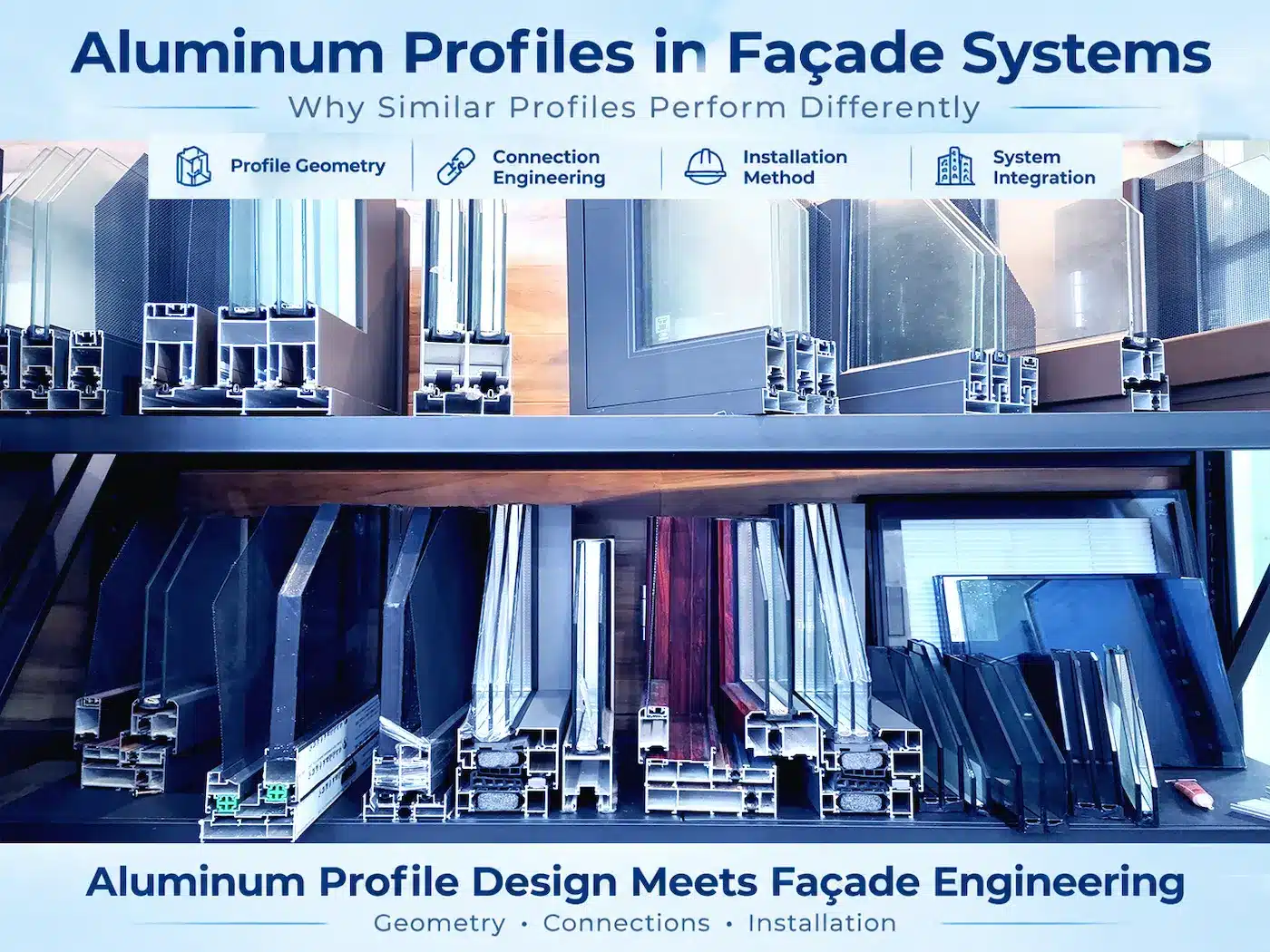
When evaluating a façade system, aluminum profiles are often a key component that influences design decisions. However, façade performance is determined by more than the profile itself.
A similar aluminum profile design can deliver different performance depending on how it is integrated into a façade system. The reason is that façade performance results from the interaction between structural design, connection methods, glazing solutions, sealing strategies, and installation processes.
Understanding this relationship helps architects, contractors, and developers make more informed decisions when selecting façade solutions.
The performance of an aluminum profile is closely connected to the façade system around it.
In a stick curtain wall system, aluminum profiles are fabricated into vertical mullions and horizontal transoms, which are assembled on-site to form the supporting framework for glass panels.
These profiles form the primary framing structure of the façade system, transferring loads between glazing panels, connected components, and the building structure.
Because the mullions and transoms are assembled and connected on-site, the final performance depends on the accuracy of:
In this system, aluminum profiles are integrated as individual framing members during installation, creating a complete curtain wall structure that supports both structural and functional requirements.
In a unitized curtain wall system, aluminum profiles are integrated into factory-assembled façade units before being transported and installed on the building structure.
Instead of being assembled individually on-site, the profiles become part of a complete façade module that combines framing, glazing, sealing, and connection interfaces.
Their design needs to accommodate requirements such as:
In this system, aluminum profiles contribute not only to the structural framework of the façade but also to the precision, coordination, and performance of the prefabricated unit.
An aluminum profile may therefore serve a different role when integrated into a unitized system, where factory integration and modular performance become key considerations.
Stick Curtain Wall | Unitized Curtain Wall | |
Profile Integration | Fabricated into mullions and transoms | Integrated into prefabricated façade units |
Installation Approach | Site assembly | Factory assembly |
Key Requirements | Connection accuracy and installation quality | Fabrication precision and unit coordination |
Role of Aluminum Profiles | Form the structural framework of the façade | Form part of a prefabricated façade module |
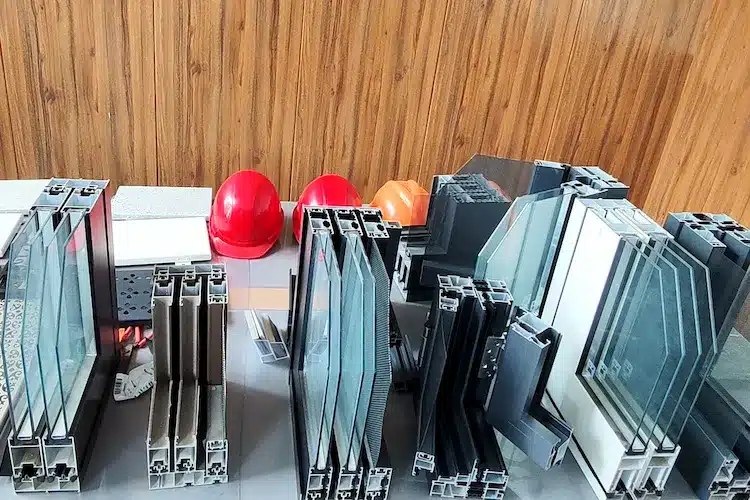
The structural performance of an aluminum profile depends on both material properties and geometric design.
Different profile designs can provide different:
For curtain wall applications, designers need to consider factors such as:
The effectiveness of an aluminum profile comes from how well its design aligns with the actual requirements of the project.
The performance of an aluminum profile is shaped by its connections with other façade components, including load transfer, sealing performance, thermal behavior, and water management.
Important connection elements include:
For example, a curtain wall system requires carefully designed drainage principles to manage water infiltration. Effective rainwater management is achieved through the coordinated design of:
Well-designed connections between aluminum profiles and other façade components support structural stability, weather resistance, and long-term system reliability.
The final performance of an aluminum profile within a façade system is the result of both engineering design and installation execution.
Different façade systems adopt different installation approaches.
For stick curtain walls, performance is closely related to:
For unitized curtain walls, key considerations include:
Accurate installation ensures that aluminum profiles are integrated into the façade system as intended.
Aluminum profile design and selection should align with the specific demands of each project.
Factors including climate conditions, building height, wind loads, architectural requirements, and installation conditions define the structural and functional criteria for aluminum profiles within a façade system.
Project conditions create different requirements for aluminum profiles:
♦ High-rise buildings with significant wind loads
→ Call for optimized profile sections and enhanced structural capacity.
♦ Projects in hot climates
→ Place greater emphasis on thermal performance and solar control integration.
♦ Complex architectural designs
→ Benefit from profiles with greater fabrication flexibility for customized façade configurations.
The value of an aluminum profile lies not only in its individual design, but also in how effectively it functions within a complete façade system. Evaluating profiles from this system-based perspective helps achieve better balance between structural performance, functionality, and project requirements.
If you are planning a residential, commercial, or infrastructure facade project and require curtain wall engineering, system development, or installation support, SunFrame can assist from early design coordination to project execution — helping ensure reliable, well-engineered facade performance throughout the building lifecycle.

5 Overlooked Risks During Unitized Curtain Wall Hoisting Introduction Unitized curtain wall hoisting is a critical stage where factory-fabricated panels are installed into their final

Beyond Customization: Three Misunderstandings About Standardized Façade Systems Introduction When discussing façade systems, customization is often viewed as a sign of flexibility and design freedom.

When Should You Contact a Facade Supplier? A façade supplier is often contacted when a project is ready to request quotations. However, meaningful discussions often

Hotel Façade Design: Why Different Hotel Types Require Different Façade Strategies Introduction Looking across SunFrame’s Hotel & Hospitality Facades Projects, one interesting observation stands out. Although