

Sunframe-Logo

What Can a General Contractor Really Control in Curtain Wall Decisions?

Introduction

A curtain wall system is the result of many interconnected decisions made throughout a project lifecycle. Architects define the design vision, façade specialists develop technical solutions, and general contractors help align these decisions with cost, schedule, and construction requirements.

Understanding the level of influence a general contractor has in curtain wall decisions helps clarify responsibilities, improve coordination, and create more predictable project outcomes.

Curtain Wall Decisions

1. Influence on Curtain Wall System Selection

Curtain wall system selection is mainly shaped by architectural intent, performance requirements, budget considerations, and construction conditions.

Key factors include system type, installation approach, project schedule, and long-term maintenance needs.

General contractors may not determine the original design concept, but they influence how practical and achievable the selected system is during construction.

For example, a unitized curtain wall system can improve installation efficiency for high-rise projects, but it requires careful coordination of fabrication, transportation, lifting, and installation sequences.

By reviewing these factors early, general contractors can help identify construction challenges and provide practical input before they impact the project.

2. Influence on Façade Contractor Selection

General contractors play an important role in selecting façade partners who can meet the project’s technical, commercial, and delivery requirements.

During the selection process, they evaluate factors such as technical capability, previous project experience, production capacity, and delivery reliability.

A suitable façade partner helps create smoother coordination throughout the project and supports better control of schedule and quality.

3. Influence on Cost and Value Engineering Decisions

Cost management is a key area where general contractors influence curtain wall decisions.

Through value engineering, general contractors work with project stakeholders to evaluate options related to materials, detailing, and installation methods while considering project requirements and construction conditions.

These decisions help balance project budget, construction efficiency, and long-term curtain wall performance throughout the delivery process.

General Contractor in Curtain Wall

4. Influence on Site Conditions and Interface Management

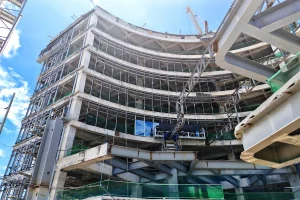
Curtain wall installation is closely connected with other building activities, making interface management an important area where general contractors influence project outcomes.

General contractors coordinate critical conditions that affect façade installation, including:

  • Structural readiness
  • Floor and opening tolerances
  • Access and lifting conditions
  • Material handling and storage
  • Interfaces with other trades

Effective interface management minimizes installation conflicts and creates a more controlled environment for façade systems to achieve their intended performance.

5. What General Contractors Have Limited Control Over

While general contractors influence many project decisions, some aspects of curtain wall performance remain outside their direct control due to the specialized nature of façade design and execution.

🔒Design Direction and Performance Objectives

General contractors can provide practical feedback during design development, particularly regarding constructability and project requirements.

However, the overall façade vision, aesthetic expectations, and performance objectives are established through the project design process and form the basis for later technical decisions.

🔒Façade Engineering Solutions

General contractors coordinate with façade specialists to support project delivery, but detailed engineering decisions require specialized façade knowledge.

System design, performance calculations, and technical detailing are developed based on project requirements, applicable standards, and façade engineering principles.

🔒Fabrication and Installation Quality

General contractors can manage project execution and site coordination, but the quality of façade fabrication and installation depends heavily on specialized manufacturing processes and installation expertise.

Fabrication accuracy, quality control procedures, and workmanship directly influence the final performance and long-term reliability of the curtain wall system.

Curtain Wall Project Management

Understanding these boundaries allows general contractors to focus their efforts on effective coordination, risk management, and project delivery while ensuring specialized façade decisions are handled by qualified professionals.

Conclusion: The General Contractor’s Role in Curtain Wall Decisions

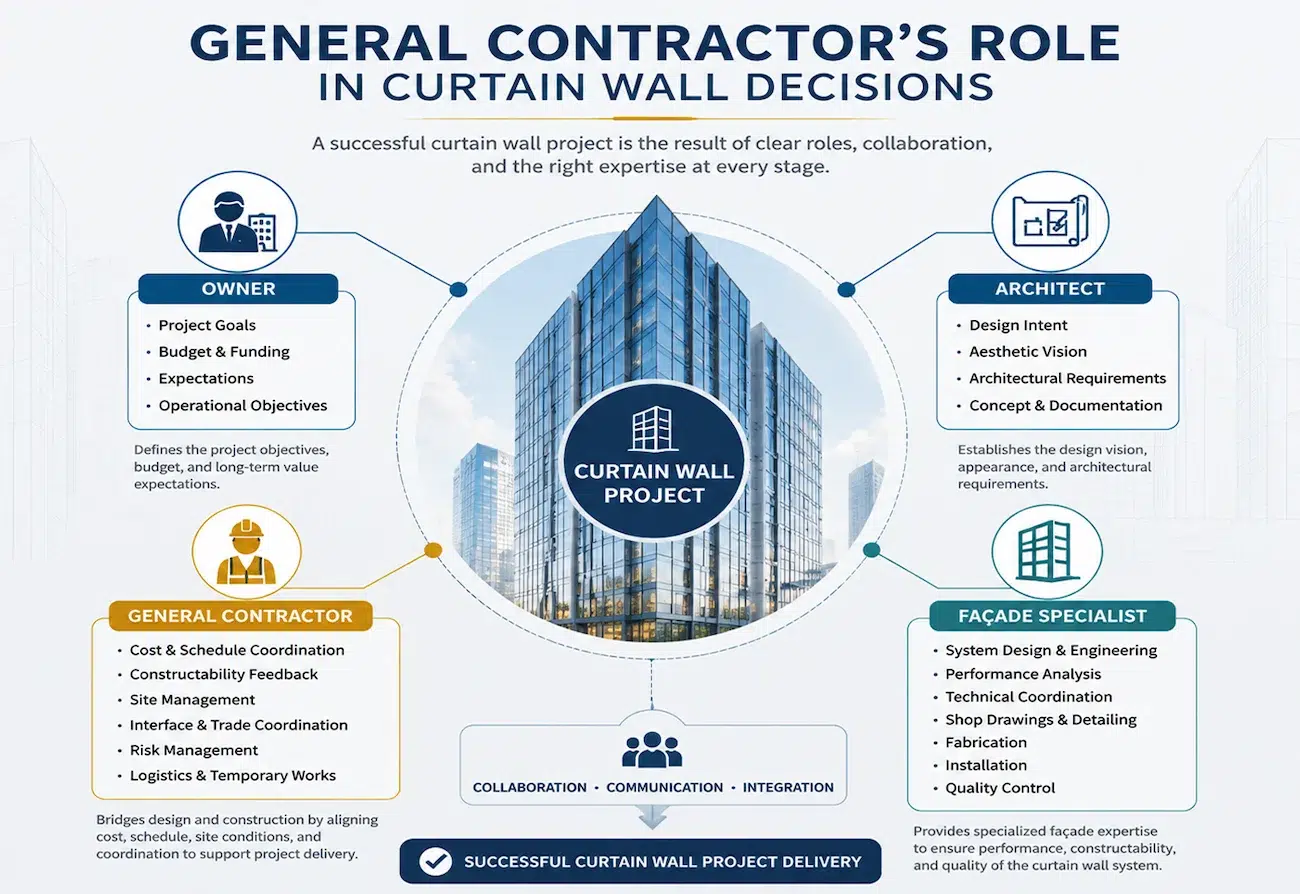
A successful curtain wall project depends on the integration of different areas of expertise throughout the project lifecycle.

General contractors connect design expectations, commercial requirements, and construction realities by facilitating collaboration between owners, architects, consultants, and façade specialists.

When each party contributes their expertise at the appropriate stage, curtain wall decisions become more effective and project risks can be better managed.

The role of a general contractor is to bring different stakeholders together and ensure that key façade decisions are addressed by the appropriate professionals throughout the project.

Work With SunFrame on Your Next Facade Project

If you are planning a residential, commercial, or infrastructure facade project and require curtain wall engineering, system development, or installation support, SunFrame can assist from early design coordination to project execution — helping ensure reliable, well-engineered facade performance throughout the building lifecycle.

Leave a Reply

Your email address will not be published. Required fields are marked *

This site uses Akismet to reduce spam. Learn how your comment data is processed.

Other Posts

Contact Us