What Can a General Contractor Really Control in Curtain Wall Decisions?
What Can a General Contractor Really Control in Curtain Wall Decisions? Introduction A curtain wall system is the result of many interconnected decisions made throughout
A façade system involves multiple decisions throughout the development of a building project.
Although all project participants work toward the same building outcome, each party approaches façade solutions based on different responsibilities, objectives, and project requirements.
Exploring these differences provides a clearer understanding of how façade decisions are developed throughout a project.
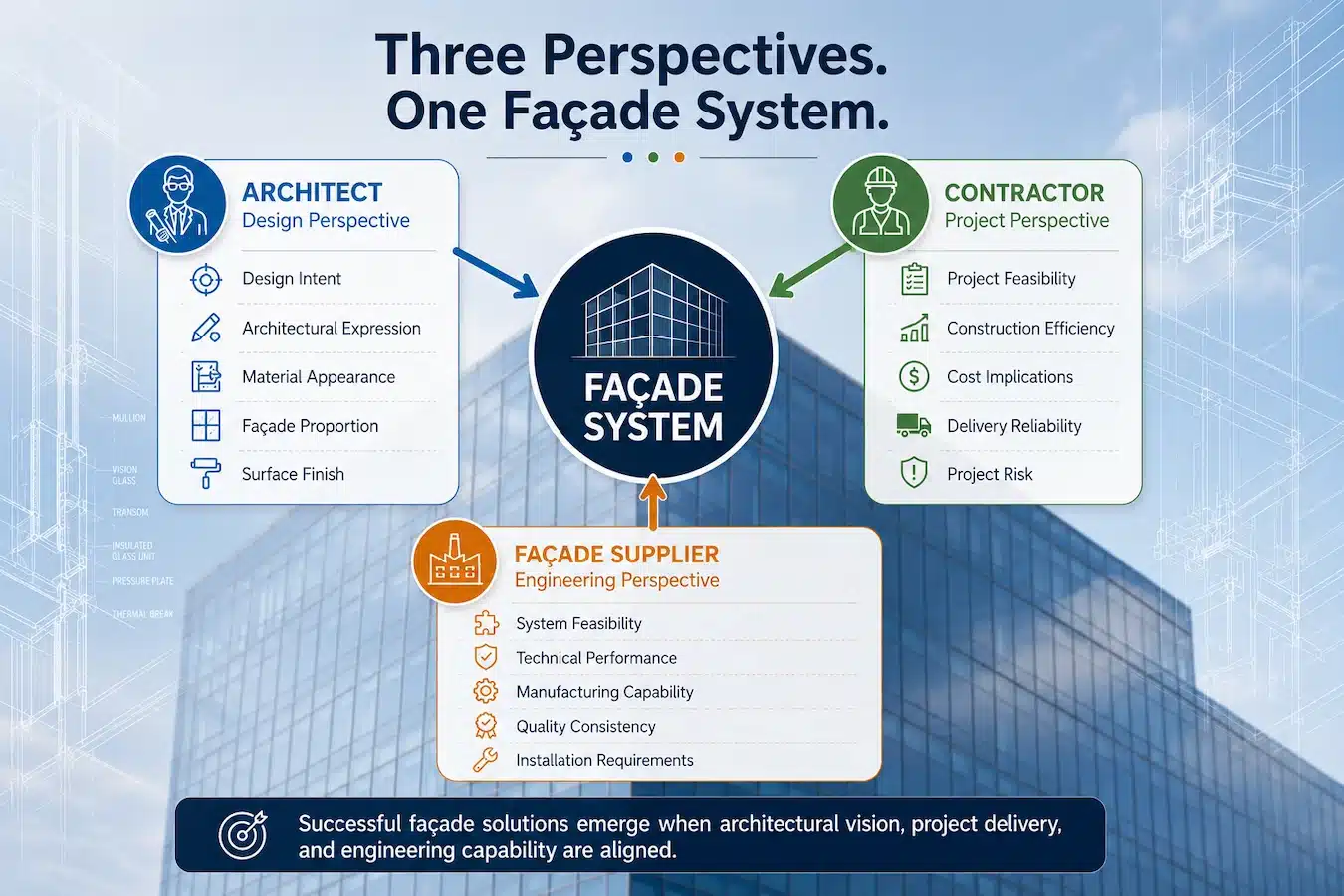
A façade system sits at the intersection of architectural ambition, technical performance, manufacturing capability, and project delivery requirements.
As different stakeholders evaluate the same solution through their own professional perspective, the factors that define a “suitable” façade system may vary significantly.
For a high-performance curtain wall system, the same solution may be viewed differently:
♦ Architects may focus on design expression.
♦ Contractors may focus on project execution.
♦ Façade suppliers may focus on engineering realization.
These perspectives represent different dimensions of façade decision-making. Recognizing each perspective allows project teams to develop a more complete view of a façade solution’s potential and limitations.
For architects, a façade system is an integral part of the building’s architectural concept, influencing how the design intent is expressed through the façade.
Architectural Expression and Appearance
Architects typically focus on:
A façade system needs to support the intended character of the building, whether the goal is a clean modern appearance, a strong architectural identity, or a specific material expression. Architectural requirements therefore remain a key consideration when assessing façade solutions, alongside technical and project considerations.
For contractors, the value of a façade system is closely related to its impact on project delivery and execution.
The key question is whether the proposed solution can be successfully incorporated into the construction process while aligning with schedule, commercial, and site requirements.
Key considerations may include:
A façade system directly affects the predictability and efficiency of project execution, making its practical performance an important part of overall project decision-making.
Façade suppliers bridge the gap between architectural concepts and practical façade solutions.
Their role is to translate design requirements into engineered systems supported by appropriate technical, manufacturing, and delivery capabilities.
Key considerations may include:
A successful façade solution depends on the ability to convert design requirements into a system that can be reliably manufactured and applied on site.
Different evaluation criteria naturally exist because each stakeholder brings different responsibilities and priorities to a project.
Façade projects achieve better outcomes when these perspectives are aligned from an early stage.
A well-developed façade solution should address:
Architectural goals
→ expressing the intended appearance and design concept
Project requirements
→ meeting schedule, coordination, and delivery expectations
Engineering feasibility
→ enabling reliable fabrication, performance, and installation
The most effective façade solutions are developed through the integration of architectural objectives, project needs, and engineering capabilities.
A façade system reflects multiple dimensions of a building project, from architectural vision and technical requirements to practical execution.
Successful façade delivery depends on how effectively architectural objectives, project requirements, and engineering capabilities are brought together.
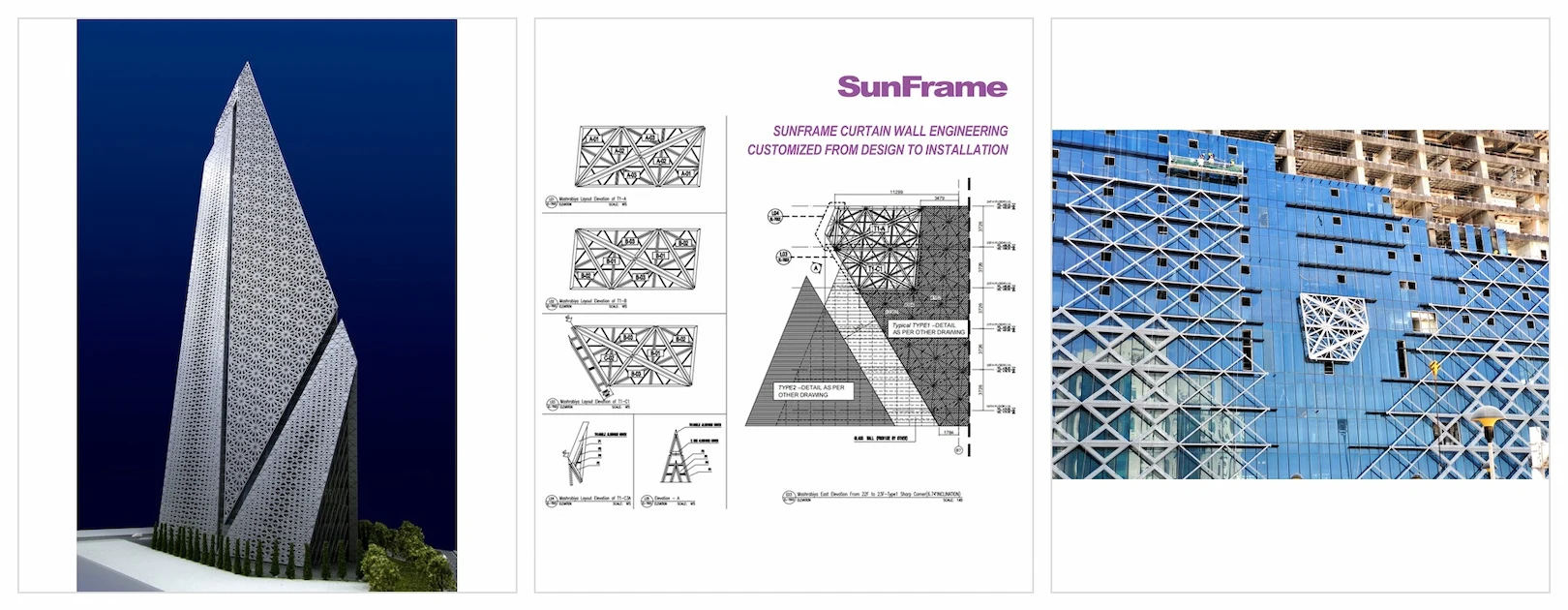
At SunFrame, we view façade engineering as the process of connecting design concepts with practical solutions.
Through engineering expertise, manufacturing capability, and project experience, we aim to deliver façade systems that meet both design expectations and real-world requirements.
If you are planning a residential, commercial, or infrastructure facade project and require curtain wall engineering, system development, or installation support, SunFrame can assist from early design coordination to project execution — helping ensure reliable, well-engineered facade performance throughout the building lifecycle.

What Can a General Contractor Really Control in Curtain Wall Decisions? Introduction A curtain wall system is the result of many interconnected decisions made throughout

Curtain Wall Air Tightness: Why Testing, Fabrication, and Installation Matter Introduction Air tightness is a key performance requirement of curtain wall systems. Standardized testing helps

Curtain Wall Waterproofing: Is It a Material Failure or a System Failure? Introduction When curtain wall leakage occurs, inspection typically covers both material and system

Beyond Manufacturing: Where Will Future Growth Come From in the Façade Industry? Introduction For decades, growth in the façade industry was closely tied to construction