Sunframe-Logo

Beam Twist Control in Stick-Built Glass Curtain Wall Projects

Beam twist is a common structural challenge in stick-built glass curtain wall construction. It arises from glass panel weight, uneven load distribution along beams, profile characteristics, and installation precision. Drawing on extensive project experience, SunFrame has developed a systematic approach to manage beam twist, keeping horizontal members within design limits while maintaining structural stability.

Beam Twist Control in Stick-Built Glass Curtain Wall Projects

1. Causes of Beam Twist

♦ Panel layout and eccentric loading

Large glass panels increase the eccentric load on beams. If the panel layout is poorly designed, the front edge of the beam may be unevenly loaded, leading to twisting. A well-planned layout balances structural stability with façade aesthetics, controlling both panel weight and eccentricity to prevent beam distortion.

♦ Limited torsional capacity

Glass positioned at the beam front generates additional torque. When beams have insufficient cross-sections or lack torsional verification, they are prone to deformation under self-weight or wind loads. In practice, using multi-chamber or closed-section profiles increases their rigidity and torsional resistance.

♦ Missing mock-up installations

Mock-ups are essential for testing both installation accuracy and structural response. Without this step, beam twist may go unnoticed until full-scale installation, causing expensive rework.

♦ Profile selection and fabrication accuracy

Non-custom profiles or poor fabrication tolerances compromise beam performance. Small misalignments in hole positions or dimension errors can lower a beam’s torsional resistance. This reduction may in turn affect overall alignment and structural stability.

♦ Beam-to-column connections

Insufficient bolts or an improper layout, especially on long spans or panels offset toward the front, can increase beam twist. Moreover, accumulated deviations in hole positions may cause slight rotation after installation, which, if left uncorrected, could compromise both the visual appearance and structural integrity of the curtain wall.

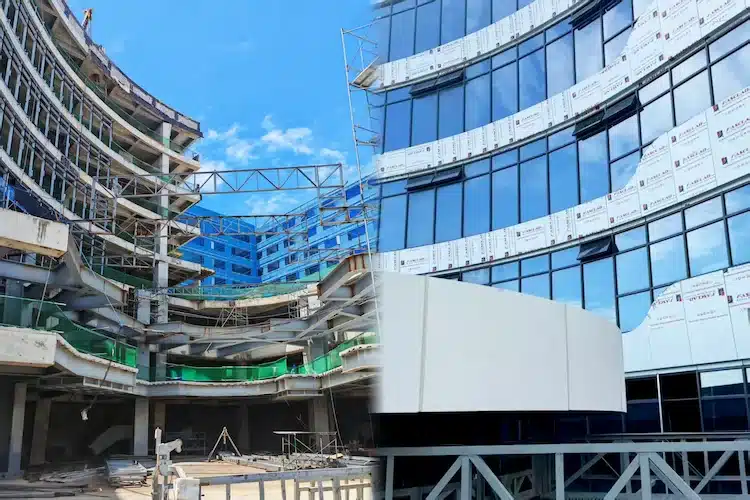
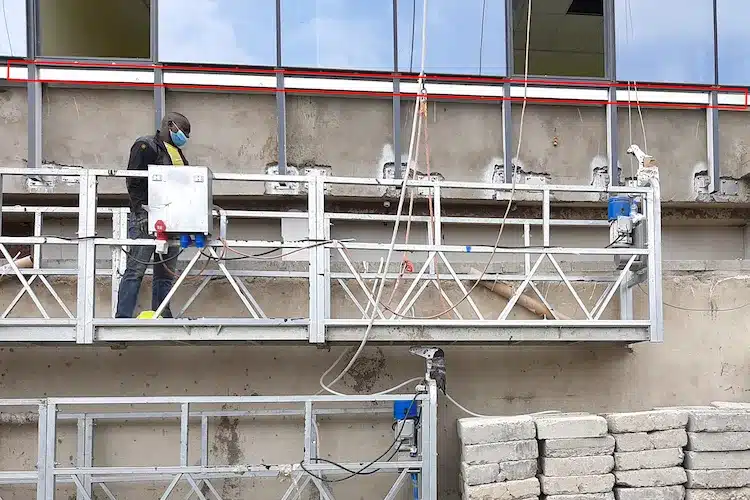
Façade installation solutions

2. Engineering Control Measures

▶ Optimized panel layout

Panel sizes and weights are carefully selected to distribute loads evenly and limit eccentric forces. This ensures that each beam segment carries a balanced load while preserving the intended façade appearance.

▶ Torsional verification and profile selection

Beams are analyzed for torsional resistance under design loads. Profiles are then chosen or adapted to provide sufficient stiffness, and cross-sections are evaluated during the design phase to prevent unexpected deformations.

▶ Mock-up installation and feedback

Construction mock-ups provide hands-on assessment of alignment and minor twist. Observations gathered on-site guide refinements in installation techniques or design adjustments before mass installation begins.

▶ Custom profiles and fabrication control

For large-panel projects, profiles are tailored with strict control over fabrication tolerances, including hole positions, diameters, and geometry. This guarantees that assembled components meet structural performance requirements.

▶ Connection optimization and deviation management

Bolt quantity and arrangement are carefully designed to minimize twist. Small deviations are compensated by adjusting bracket alignment or bolt positions, keeping any rotation within acceptable limits.

▶ Equipment calibration and maintenance

Regular inspection, calibration, and upgrading of fabrication machinery prevents deviations and limits errors that could negatively impact beam behavior.

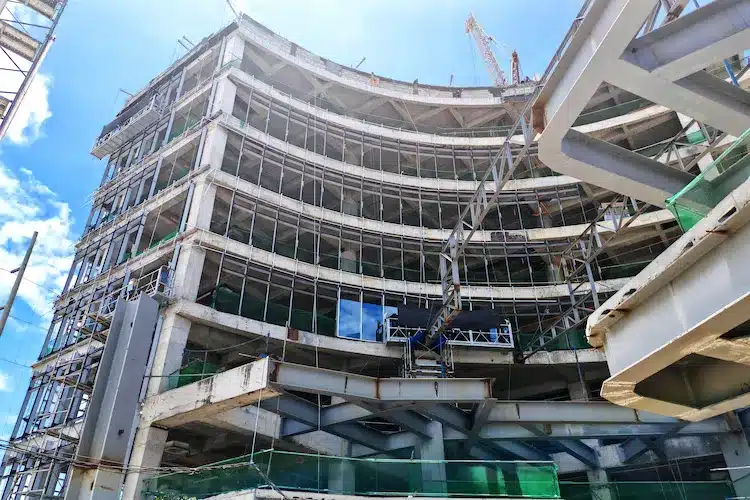
Beam stability-stick built curtain wall

3. Full Process Management

Effective beam twist control relies on coordinated action across all project stages:

☑ Design: Beam cross-sections are optimized, panel layout planned, and torsional performance calculated.

☑ Mock-ups: Alignment and twist are checked on-site, with findings applied to refine design or installation procedures.

☑ Fabrication: Tolerances are strictly monitored so that profiles satisfy structural requirements.

☑ Installation: Fine adjustments to bolts and brackets compensate for deviations, keeping twist within safe limits.

By linking all stages in this workflow, SunFrame maintains beam stability throughout the construction process, enhancing both structural performance and installation quality.

4. Engineering Insights

Effective beam twist control demands a comprehensive, systematic approach spanning design, mock-up verification, profile selection, fabrication precision, and installation adjustments.

Consequently, applying this integrated methodology allows early detection of potential issues, reduces rework, and ensures reliable large-scale stick-built curtain wall construction.

Start Your Curtain Wall Project Today

Share your project details and let our experts provide tailored solutions for a safe, precise, and efficient curtain wall installation.

Leave a Reply

Your email address will not be published. Required fields are marked *

This site uses Akismet to reduce spam. Learn how your comment data is processed.

Other Posts

Contact Us