Metal Facade Systems as a Medium of Brand Architecture
Metal Facade Systems as a Medium of Brand Architecture — An Observation on Geometric Expression and Constructive Order The facade of a commercial space is
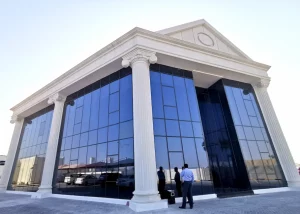
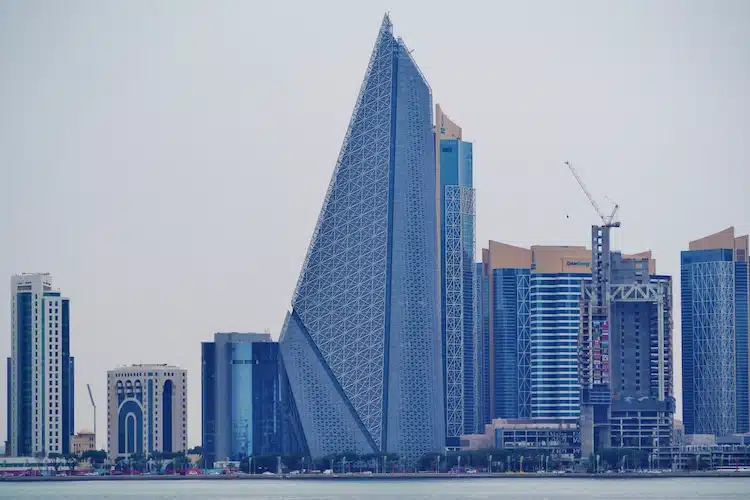
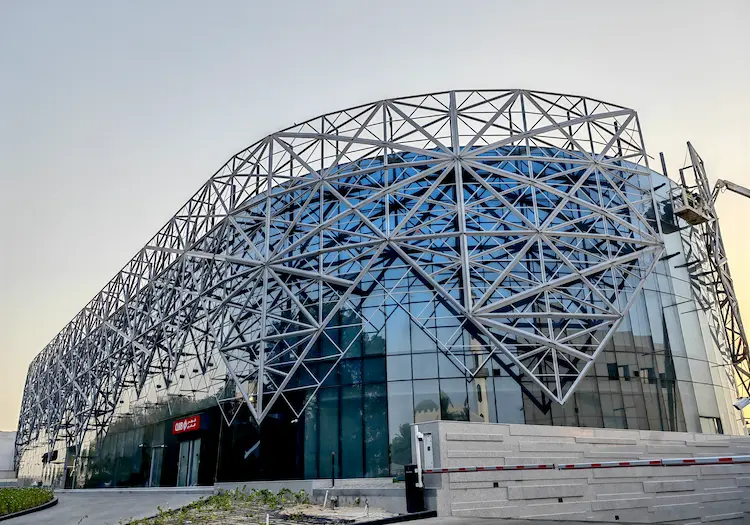
High-quality façades do more than define a building’s exterior—they shape the way people see, move through, and remember a space. SunFrame’s projects, including Burj Al Mana Tower, Al Mana Group HQ, Doha Centro Mall, and Jumma Mosque (QET JMA) in the Middle East, demonstrate how façades leverage light, proportion, materiality, and geometry to guide psychological responses. These strategies help drive emotional engagement while supporting both brand activation and user experience.
Perforations or lattice patterns across façades create soft gradients of light and shadow, producing warm, inviting spaces that encourage exploration.
Case Study: The perforated façade of Doha Centro Mall guides visitors along main circulation paths through visual rhythm, fostering a light and lively atmosphere.
Continuous modules, vertical proportions, and geometric order establish visual rhythm, conveying spatial stability and a professional image.
Case Study: Al Mana Group HQ uses geometric order and modular continuity to reinforce the corporate image of reliability and steadiness.
Façade detailing, layered light and shadow, and visual variation guide sightlines, energizing spatial exploration and commercial appeal.
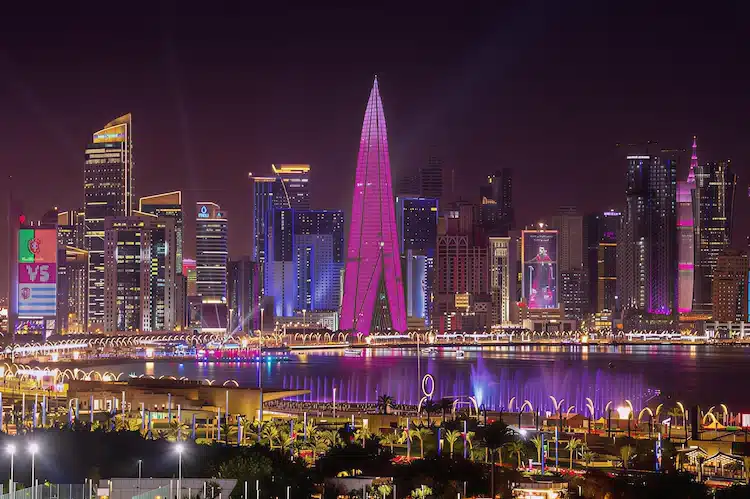
Case Study: Burj Al Mana Tower incorporates subtle shifts in panel depth and reflective surfaces. The façade’s rhythm interacts with natural sunlight throughout the day, producing dynamic shadow patterns that enliven office, residential, and retail areas. At night, illumination highlights the vertical and horizontal planes, turning the tower into a striking visual landmark.
Spatial rhythm directly influences circulation patterns and visitor experience:
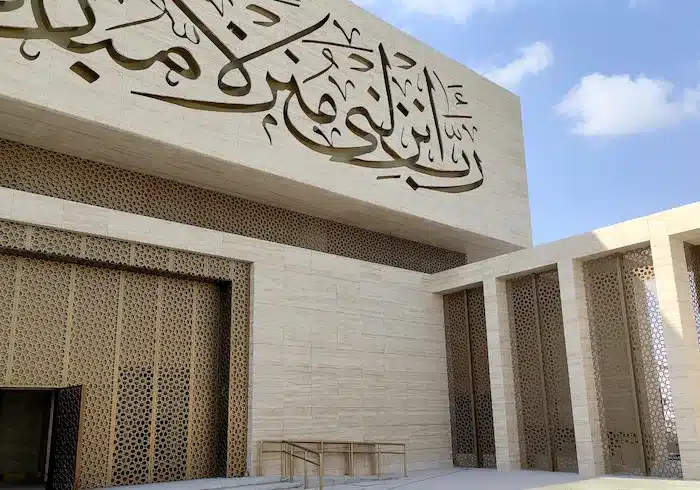
Religious and Cultural Spaces: Light, shadow, and proportion communicate order and evoke spiritual ambience.
Case Study: Jumma Mosque (QET JMA) uses layered light and shadow on its façade to cultivate a solemn and serene environment, particularly during evening prayers.
Light and shadow are powerful tools for shaping visitor perception:
♢ Comfort and Safety: Perforations, reflective surfaces, or shading soften light, reducing tension
♢ Circulation and Attention Guidance: Contrast, layering, and rhythm naturally direct sightlines
♢ Brand and Spatial Atmosphere: Light intensity, color temperature, and rhythm reinforce corporate or cultural identity
♢ Night Reference: The nighttime façade of Burj Al Mana Tower reveals how the interplay of light and shadow shapes spatial perception and deepens emotional engagement.
Façade design can be understood as a psychological conversion chain:
☞ Visual Reception: color, material, proportion, rhythm
☞ Cognitive Interpretation: pattern coherence and legibility
☞ Emotional Response: comfort, curiosity, trust
☞ Behavioral Influence: dwell time, path selection, spatial preference
This framework illustrates that façades are not merely aesthetic surfaces, but triggers for psychological and behavioral responses.
Through light and shadow, perforations, module proportions, and material texture, façades act as bridges between brand and spatial psychological experience. They enhance comfort, encourage exploration, and strengthen brand identity and cultural recognition, creating high-quality, emotionally engaging experiences for visitors.
Interested in elevating your building’s brand and user experience? Contact SunFrame to discuss tailored façade solutions.

Metal Facade Systems as a Medium of Brand Architecture — An Observation on Geometric Expression and Constructive Order The facade of a commercial space is

Curtain Walls Under Tropical Water Exposure — Water as a constant environmental condition in Southeast Asia In Southeast Asia, building envelopes operate under a consistently

How to Choose the Right Curtain Wall Partner From Design Intent to System Engineering and Site Execution A curtain wall may look complete on drawings,

Curtain Wall Color Durability: From Aesthetics to Performance As Easter approaches, the colors of spring begin to fill urban spaces. From the playful decorations of