Facade Thermal Performance: Beyond Material Properties
Façade Thermal Performance: Beyond Material Properties Introduction When you receive a façade specification with numbers such as thermal conductivity, thermal resistance, and U-value, how do
When curtain wall leakage occurs, inspection typically covers both material and system components, including sealants, gaskets, drainage paths, and installation details.
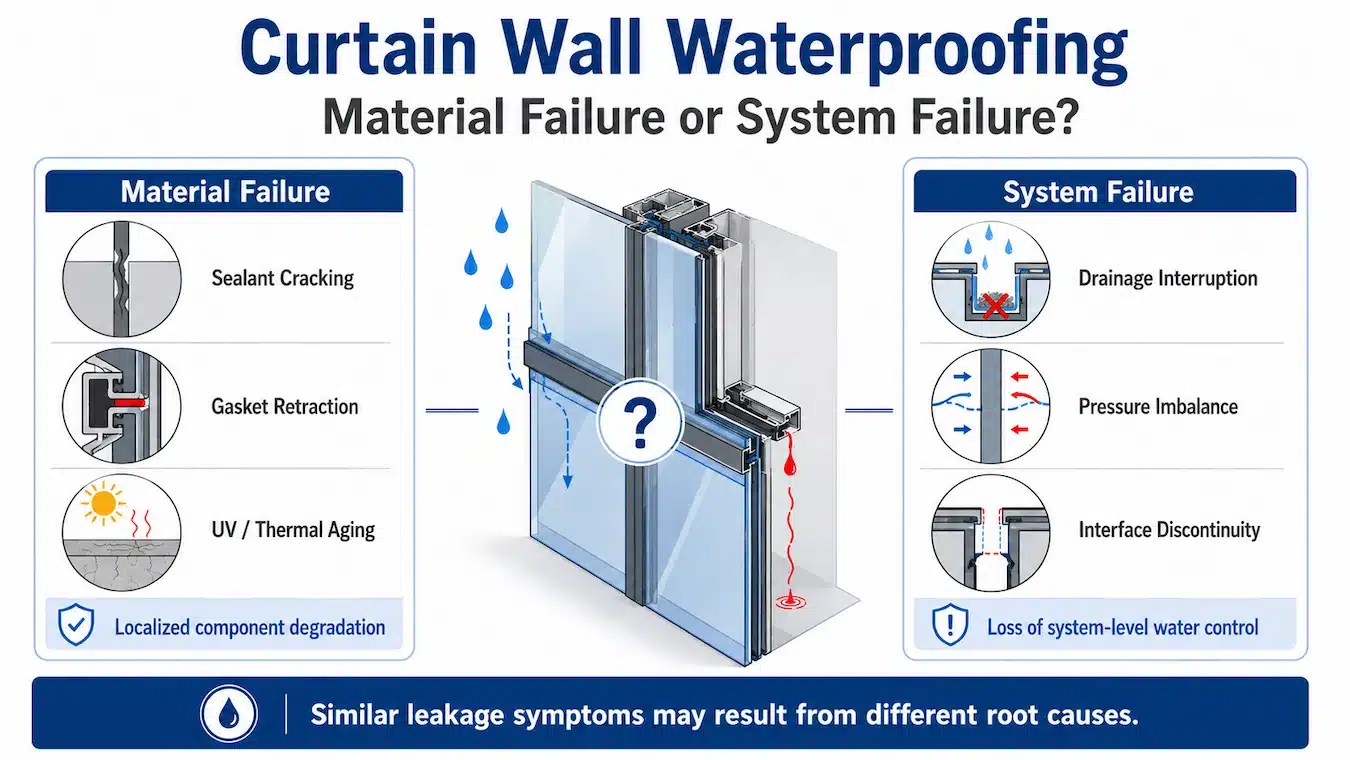
Similar leakage symptoms may result from different underlying causes, ranging from material degradation to system-level design or construction issues.
The key engineering question is:
Is the leakage caused by material failure or system failure?
The objective is to identify the dominant cause in each case.
Material failure refers to cases where waterproofing components have lost their intended performance due to aging, degradation, or incompatibility with the environment.
Common examples include:
These failures are typically gradual and localized, depending on exposure and service life.
Material failure is often confirmed through a combination of visual inspection, tactile assessment, and performance evaluation, not appearance alone.
System failure refers to cases where water, air pressure, or structural movement is not properly controlled within the curtain wall system.
Typical conditions include:
In these cases, water penetration is driven by system behavior.
The waterproofing materials remain functional, but the system allows water to reach vulnerable points.
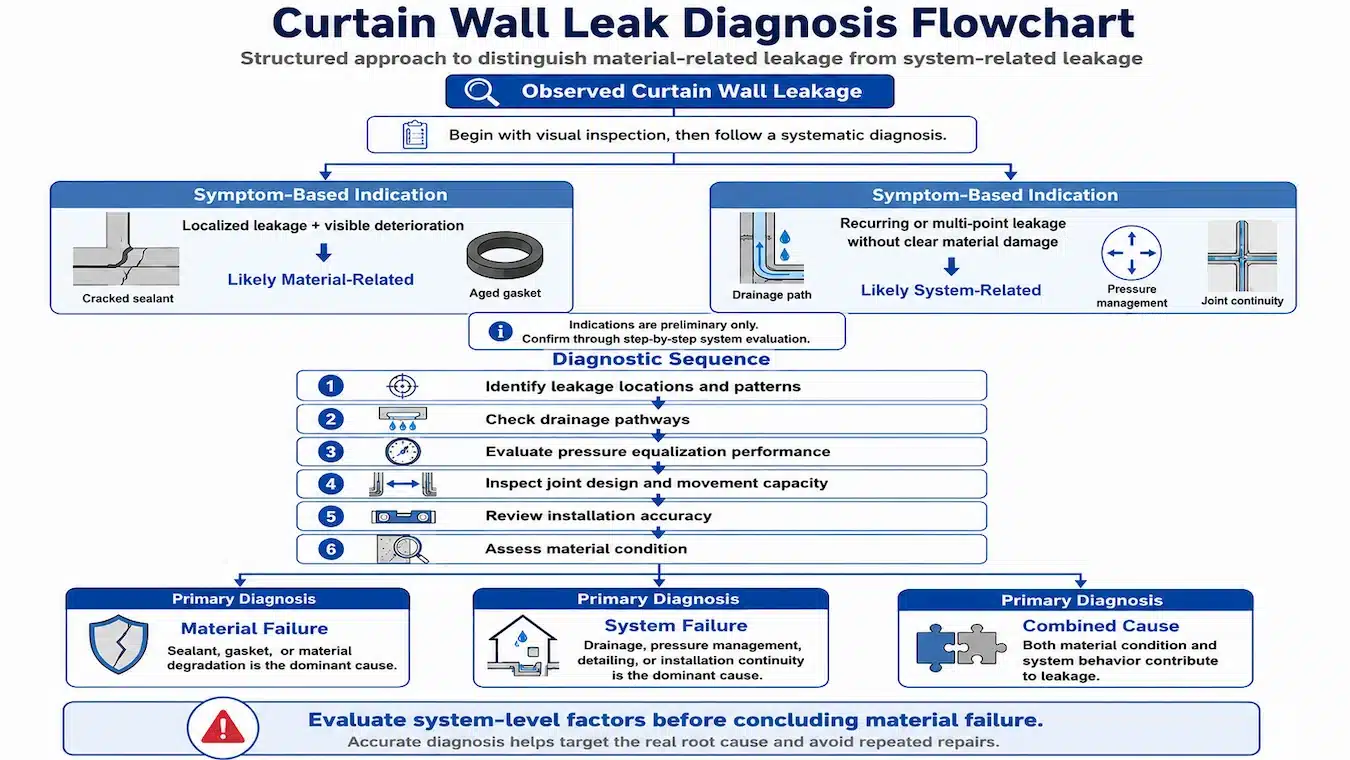
In real engineering practice, curtain wall leakage diagnosis should follow a structured and systematic logic, with visual inspection as the initial step.
A practical approach is to combine symptom-based judgment with a step-by-step system evaluation.
Symptom-based indication:
▶ Localized leakage associated with visible deterioration → likely material-related
▶ Recurring or multi-point leakage without clear material damage → likely system-related
Diagnostic sequence:
① Identify leakage locations and patterns
② Check drainage pathways
③ Evaluate pressure equalization performance
④ Inspect joint design and movement capacity
⑤ Review installation accuracy
⑥ Assess material condition
This sequence ensures that system-level factors are fully evaluated before concluding material failure, helping corrective measures address the actual root cause of leakage.
In tropical regions such as the Philippines, curtain wall systems are exposed to prolonged wind-driven rain, high humidity, and frequent heavy rainfall cycles, providing a rigorous environment for evaluating long-term waterproofing performance.
Projects delivered under these conditions demonstrate that systems incorporating effective drainage detailing, pressure equalization, and movement accommodation can maintain stable performance over time.
This experience reinforces an important engineering principle: in demanding environments, reliable waterproof performance is achieved through the coordinated performance of appropriate materials, sound system design, and quality installation.
Curtain wall leakage can originate from different causes, including material degradation, system-level performance issues, or a combination of both. The key to effective resolution is not only identifying visible symptoms, but understanding how materials, drainage paths, pressure management, movement accommodation, and installation details interact within the curtain wall system.
Accurate diagnosis helps determine the appropriate corrective approach and avoids repeated repairs caused by addressing the wrong underlying issue. A deeper understanding of curtain wall drainage principles and waterproofing design strategies can further improve the evaluation of leakage causes and support more effective analysis.
For more insights into these topics, you may also refer to:
☞ Glass Curtain Wall Leak Prevention: Waterproofing Design & Drainage Solutions
If you are planning a residential, commercial, or infrastructure facade project and require curtain wall engineering, system development, or installation support, SunFrame can assist from early design coordination to project execution — helping ensure reliable, well-engineered facade performance throughout the building lifecycle.

Façade Thermal Performance: Beyond Material Properties Introduction When you receive a façade specification with numbers such as thermal conductivity, thermal resistance, and U-value, how do

Why Facade Project Value Cannot Be Measured by Unit Price Alone? Introduction When evaluating a facade solution, unit price is often one of the first

Façade–Structure Interface: Why Do So Many Problems Start Here? Introduction The façade–structure interface is where façade design meets the actual conditions of the building structure.

Beyond Construction Volume: The Future of Façade Industry Growth Introduction For decades, growth in the façade industry has been closely tied to construction volume. More