Beam Twist Control in Stick-Built Glass Curtain Wall Projects
Beam Twist Control in Stick-Built Glass Curtain Wall Projects Beam twist is a common structural challenge in stick-built glass curtain wall construction. It arises from
In airport design, managing sunlight is never just about choosing the right glass — it’s a design strategy that balances light, heat, and comfort across vast, transparent spaces.
Airports are some of the toughest places for façade engineers. With sunlight pouring in for hours, huge stretches of glass, and thousands of people waiting around, a good façade has to feel open and bright while keeping everyone comfortable and glare-free.
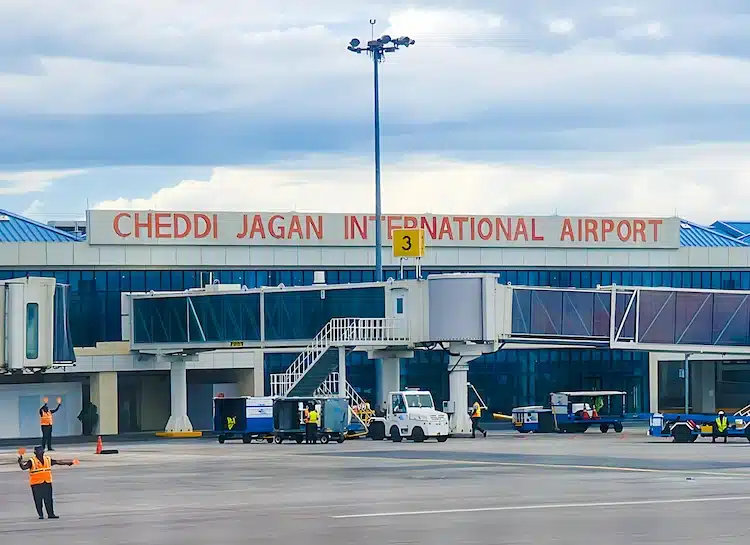
At SunFrame, we’ve learned through projects like the Cheddi Jagan International Airport (CJIA) Expansion in Guyana that true solar control goes beyond glazing specifications.
It lies in layered façade design, where glass, structure, and orientation perform together as a unified system.
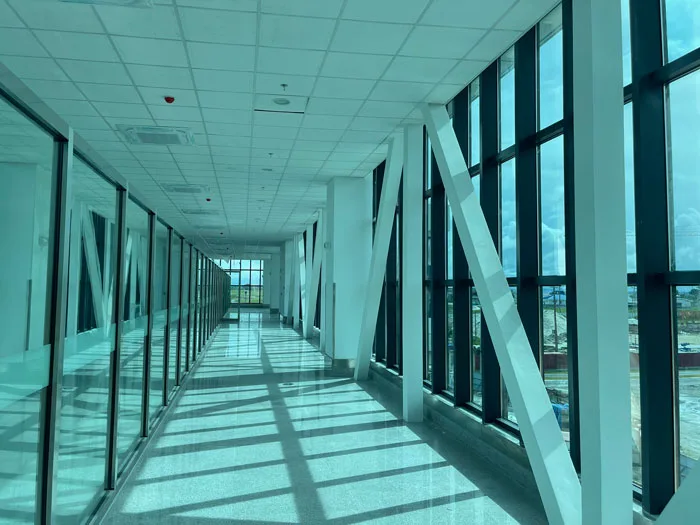
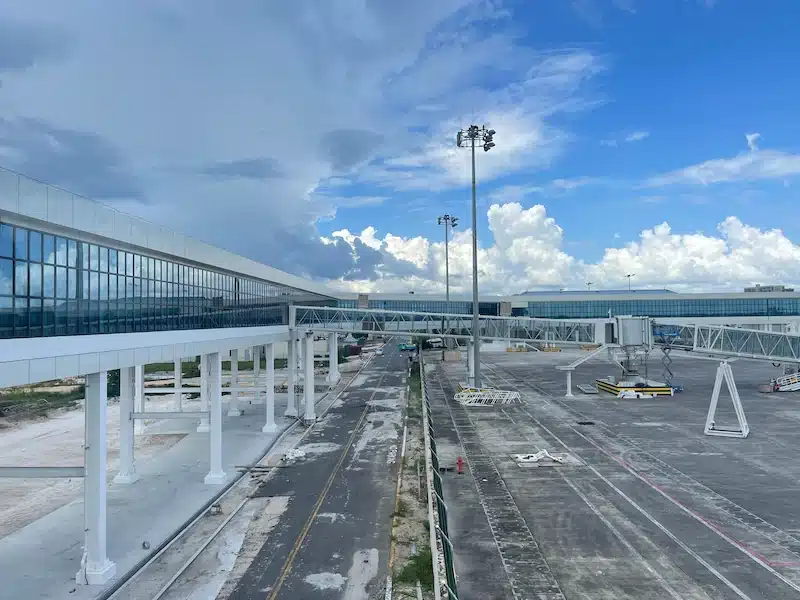
Take the glass corridors and boarding bridges as examples, these are among the most exposed zones in any airport.
Their transparent façades invite daylight and connect travelers to the outside world, yet face the harshest solar radiation and the greatest temperature variations.
To manage these variables, SunFrame’s system integrates multiple layers of defense and design intent:
Low-E Insulated Glass — the subtle blue-grey tint reduces infrared and UV transmission while preserving visual clarity and natural light.
Exposed Frame Curtain Wall System — provides both transparency and strength, reinforced with diagonal bracing to withstand coastal wind pressure.
Aluminum Veneer Panels & Deep Mullions — add shade and depth, softening sunlight contrast and defining architectural rhythm at the same time.
High-Performance Coatings — fluorocarbon finishes resist humidity, corrosion, and salt spray. This is essential in Guyana’s tropical coastal climate.
After considering the above elements, the result is both energy-efficient and serene, with light-filled walkways that stay bright yet cool, transparent yet carefully tuned for thermal comfort.
Solar control is not simply achieved through “better glass,” but through careful coordination of materials and geometry.
At CJIA, the façade orientation was deliberately studied to handle strong equatorial sunlight.
The vertical glass walls allow daylight to flood the interior corridors. Meanwhile, the Low-E coatings and optimized shading coefficient prevent excessive heat buildup.
The shifting shadow patterns across the floor reveal a high light transmission rate, whereas the infrared heat has been effectively filtered out.
Even the structure itself contributes to performance. Deep mullions act as built-in shading fins, and the tight integration between ceiling and curtain wall joints reflects precise installation and airtight detailing, which are key factors for thermal stability.
SunFrame’s approach extends beyond engineering, emphasizing how passengers experience the space.
The transparent façade creates a sense of “walking with the sky”, turning transitional zones into open, uplifting environments.
Light moves rhythmically along the corridor, offering both orientation and serenity. It’s actually a subtle emotional balance for travelers in transit.
Through blending technical precision with architectural empathy, SunFrame’s façades transform sunlight from a challenge into a design asset. This approach enhances comfort, improves efficiency, and reinforces the identity of the terminal itself.
From the Caribbean to the Middle East, SunFrame continues to face the same design question:
How do we invite light — without letting heat in?
Through advanced engineering, environmental sensitivity, and meticulous fabrication, SunFrame continues to deliver façades that perform as beautifully as they look — even under the world’s strongest sunlight.
SunFrame develops curtain wall systems that balance daylight, solar control, and thermal comfort for airports, commercial buildings, and large-span public spaces.

Beam Twist Control in Stick-Built Glass Curtain Wall Projects Beam twist is a common structural challenge in stick-built glass curtain wall construction. It arises from

Metal Facade Systems as a Medium of Brand Architecture — An Observation on Geometric Expression and Constructive Order The facade of a commercial space is

Curtain Walls Under Tropical Water Exposure — Water as a constant environmental condition in Southeast Asia In Southeast Asia, building envelopes operate under a consistently

How to Choose the Right Curtain Wall Partner From Design Intent to System Engineering and Site Execution A curtain wall may look complete on drawings,