Sunframe-Logo

Solar Shading in Modern Glass Facades: Balancing Daylight and Heat Gain

Introduction

Modern glass façades have become a defining feature of contemporary architecture, driven by demands for openness, daylight access, and visual continuity.

As façade transparency increases, solar exposure shifts to a primary environmental load that directly influences building performance.

Glazing should not be understood as a neutral boundary. Instead, it operates as an active interface between external climate conditions and internal environmental stability.

Within this framework, solar shading is integrated into the façade system to regulate solar input while preserving architectural intent and spatial quality.

Solar Shading in Modern Glass Facades

1. The Environmental Consequences of Uncontrolled Glazing

In high-transparency façade systems, solar exposure varies continuously in intensity, angle, and duration throughout the day.

These changing conditions directly affect both visual comfort and thermal stability, particularly in densely occupied interior environments.

Typical performance consequences include:

  • Localized glare impacting visual comfort and task efficiency
  • Uneven daylight distribution across interior spaces
  • Accumulated solar heat increasing cooling loads
  • Greater reliance on mechanical systems to maintain indoor stability

From a façade engineering perspective, this establishes a fundamental design tension:

daylight availability vs environmental stability

Therefore, façade systems must move beyond simple daylight admission and focus on controlling the quality, distribution, and intensity of solar input.

2. Solar Shading Controls Heat Before It Enters the Building

Solar shading regulates solar heat gain before radiation penetrates the building envelope.

As solar energy passes through glazing, indoor temperatures, cooling demand, and overall energy consumption increase accordingly.

Façade thermal performance is commonly evaluated through the Solar Heat Gain Coefficient (SHGC), which measures the proportion of solar radiation transmitted into interior spaces through glazing.

At the façade level, effective shading systems reduce solar penetration by:

  • Limiting solar radiation entering the building envelope
  • Reducing indoor heat accumulation during peak summer conditions
  • Lowering HVAC cooling demand
  • Improving overall envelope energy performance

Unlike internal blinds or curtains, external shading intercepts solar radiation before it reaches the glazing surface, resulting in significantly greater thermal control efficiency.

3. Shading Design Is Driven by Solar Geometry and Orientation

Solar shading design is governed by solar geometry, façade orientation, and seasonal sun exposure.

Different façade directions experience different solar angles throughout the day, making uniform shading strategies ineffective across the building envelope.

Key design parameters include:

  • Solar altitude and azimuth angles
  • Seasonal sun path variations
  • Façade orientation (east, west, south, north exposure)
  • Shading depth, spacing, and geometric configuration
  • Horizontal versus vertical shading logic

In practical façade engineering, this results in a performance-based zoning strategy, where different façade areas are assigned different shading systems.

For example:

  • Vertical shading systems for east and west façades exposed to low-angle radiation
  • Horizontal shading elements for south-facing façades under high-angle summer sun
  • Adjusted shading depth and density based on local climate conditions and occupancy requirements

This parametric approach allows façade systems to respond precisely to environmental conditions rather than relying on uniform architectural treatments.

Façade Solar Control Systems

4. External Shading Enhances Both Performance and Architectural Expression

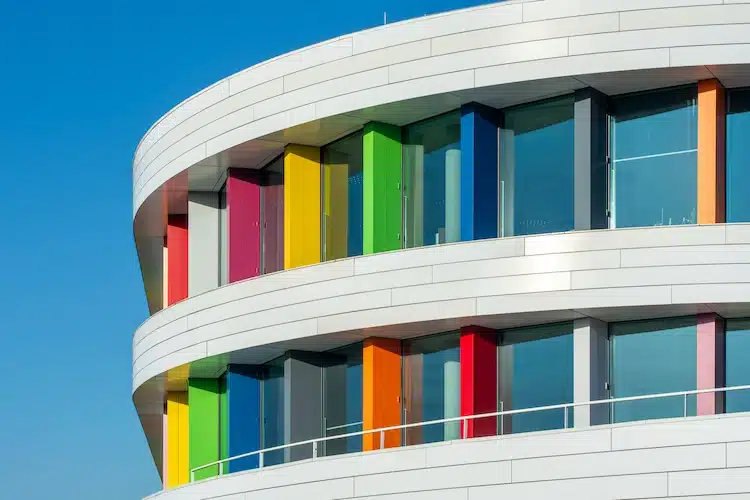
Modern solar shading systems extend beyond technical performance and contribute directly to façade composition and architectural identity.

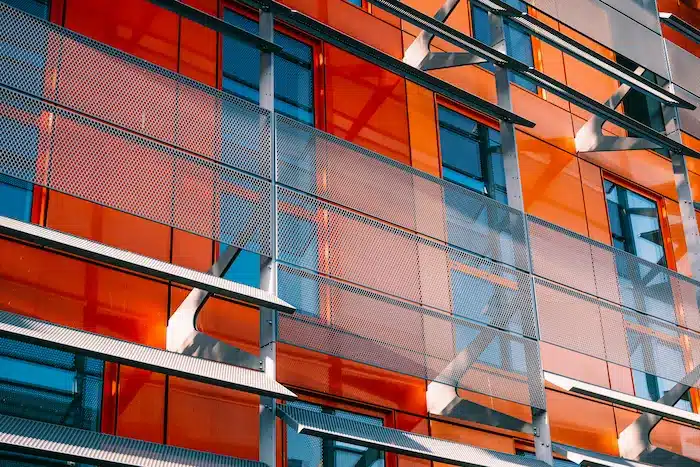
By introducing depth, layering, and material variation, shading elements generate dynamic façade conditions that shift with changing solar exposure throughout the day.

Key architectural effects include:

  • Shadow depth and spatial layering across the façade surface
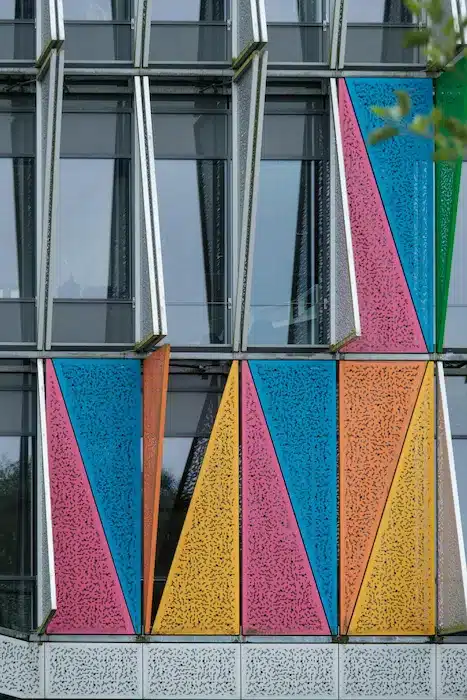
  • Visual rhythm generated by perforated panels and louver systems
  • Integration between environmental control systems and façade identity
  • Transformation of static surfaces into dynamically responsive compositions

Here, architectural expression emerges through environmental performance, where façade geometry and solar interaction jointly define visual outcomes.

5. System Integration in Real Façade Projects

In real façade applications, solar shading systems operate within curtain wall assemblies through coordinated multi-system configurations.

Performance requirements drive differentiation across façade zones, producing varied system responses to environmental conditions.

Typical implementation strategies include:

  • Vertical variation across building height
  • Horizontal zoning based on solar exposure intensity
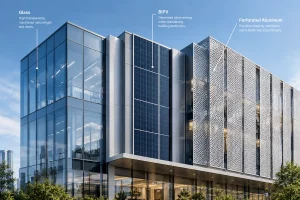
  • Combination of glass systems with aluminum shading components
  • Hybrid façade strategies integrating perforated panels and louver systems

This zoning methodology establishes system-level variation while maintaining overall façade coherence across the building envelope.

Modern façade design relies on coordinated system behavior, where structural, glazing, and shading components address performance conditions collectively.

External Shading Systems

Conclusion

Solar shading has become an essential component of modern glass façade design.

Its role extends beyond simple solar control, encompassing daylight optimization, thermal performance improvement, energy reduction, and architectural expression.

As façade design continues to evolve toward performance-based and climate-responsive approaches, solar shading systems will remain a critical interface between environmental conditions and architectural systems—shaping both building performance and façade perception.

Work With SunFrame on Your Next Facade Project

If you are planning a residential, commercial, or infrastructure facade project and require curtain wall engineering, system development, or installation support, SunFrame can assist from early design coordination to project execution — helping ensure reliable, well-engineered facade performance throughout the building lifecycle.

Leave a Reply

Your email address will not be published. Required fields are marked *

This site uses Akismet to reduce spam. Learn how your comment data is processed.

Other Posts

Contact Us