Sunframe-Logo

Vietnam Traditional Architecture vs Curtain Wall Performance

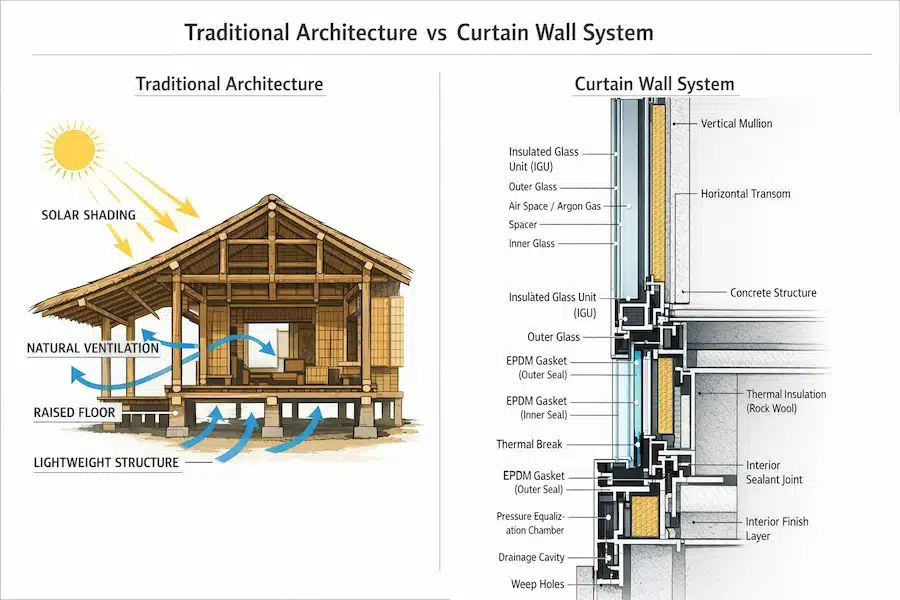
Vietnam has developed a distinctive traditional architectural system shaped by its hot, humid, and high-rainfall climate. Lightweight structures and natural ventilation are key features. With the advancement of modern construction technologies, curtain wall systems have gradually become the dominant façade solution in urban buildings.

When traditional architectural logic and modern curtain wall systems are applied within the same climate context, a key issue becomes apparent:

★ Their approaches to performance are fundamentally different.

Vietnam Traditional Architecture vs Curtain Wall Performance

01 Environmental Response Logic of Traditional Architecturets

Traditional Vietnamese architecture, including bamboo structures, timber houses, and local shading systems, can be understood as an experience-based environmental response system. Its design typically follows these principles:

  • Using natural ventilation to reduce indoor heat load
  • Controlling solar exposure through deep overhangs, shading elements, and open interfaces
  • Applying lightweight materials to limit heat accumulation
  • Allowing a certain level of structural flexibility to accommodate humid conditions

In real-world application, these buildings rely on environmental interaction to regulate indoor conditions. The building envelope functions more as a moderating layer rather than a complete barrier.

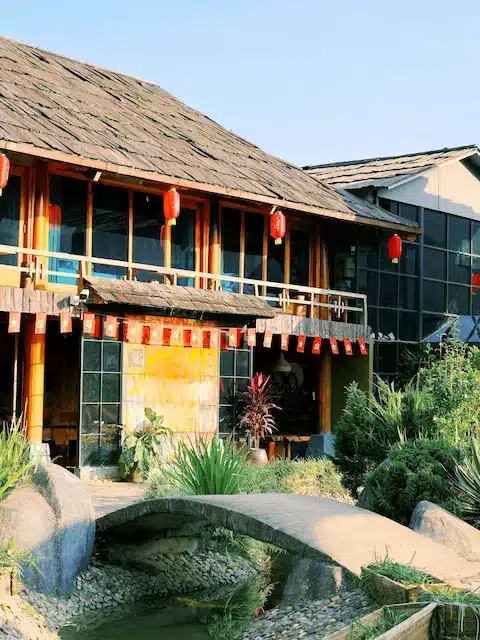
Vietnam traditional architecture

02 Performance Control Logic of Curtain Wall Systems

Modern curtain wall systems are built within a calculable and verifiable engineering framework, with a focus on stable envelope performance:

  • Airtightness and watertightness as fundamental requirements
  • Thermal performance controlled through system configuration
  • Structural deformation and deflection kept within defined limits
  • Industrialized fabrication and precise installation to ensure consistency

Within this framework, the façade operates as a performance boundary. External factors such as wind, rain, and temperature are managed through system detailing and engineering design.

03 Where the Two Logics Intersect

In Vietnam’s tropical climate, the differences between these two systems become more evident during project execution. Key aspects include:

① Performance under hot and humid conditions

Traditional buildings rely on airflow to reduce heat and moisture, whereas curtain wall systems manage heat gain and moisture ingress through the envelope itself. These two approaches follow different strategies. Besides, their effectiveness varies in dense urban environments.

② Differences in construction logic

Traditional architecture emphasizes material behavior and spatial response, in contrast, curtain wall systems depend on:

  • Connection detailing
  • Structural calculation
  • Installation tolerance control

During project delivery, issues may arise when traditional architectural forms are adopted without adapting the underlying system logic.

③ Visual expression versus engineering implementation

When translating traditional architectural language into curtain wall design, common challenges include:

  • Insufficient stiffness of components
  • Increased node complexity
  • Higher maintenance requirements

These challenges are generally related to system engineering rather than design intent.

04 Translating Regional Strategies into Curtain Wall Design

In curtain wall engineering, a practical approach is to reinterpret environmental strategies from traditional architecture into executable system solutions, such as:

  • Converting natural ventilation concepts into controlled operable systems or double-skin façades
  • Reworking shading strategies into external shading devices or parametric façade systems
  • Applying lightweight structural principles to profile optimization and load management

The focus is on transforming experiential strategies into solutions that can be calculated, fabricated, and constructed.

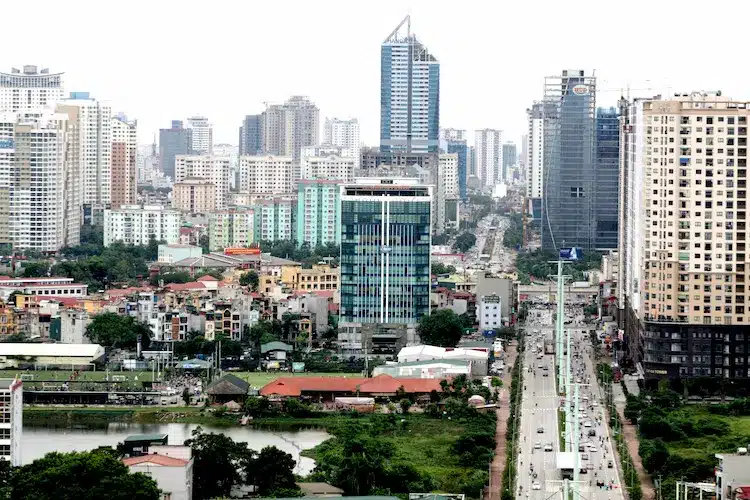
Tropical Climate Building Design

05 Key Understanding from an Engineering Perspective

From an engineering standpoint, these two systems represent different construction paths:

♦ One based on environmental adaptation and accumulated experience

♦ One based on system control and engineering constraints

In project practice, façade selection is usually determined by building height, functional requirements, and performance stability requirements.

The key consideration is whether the system can maintain consistent performance under actual environmental conditions.

Conclusion

As the construction market in Southeast Asia continues to evolve, building façades are expected to respond to both climate conditions and urban development demands.

Traditional architecture offers proven environmental response strategies, while curtain wall systems provide a pathway to translate these strategies into an engineering framework. The effectiveness of this translation often determines overall project performance.

Facade System Consultation

Discuss your project requirements with our team and explore facade solutions that balance visibility, performance, and architectural intent.

Leave a Reply

Your email address will not be published. Required fields are marked *

This site uses Akismet to reduce spam. Learn how your comment data is processed.

Other Posts

Contact Us