
Visibility and Perception in Architectural Facade Design
Visibility and Perception in Architectural Facade Design In the commemorative context of ANZAC Day, the relationship between architecture and the city is closely linked to
As Easter approaches, the colors of spring begin to fill urban spaces. From the playful decorations of seasonal eggs to the gentle tones of streetscapes, the city takes on a distinctly vibrant atmosphere.
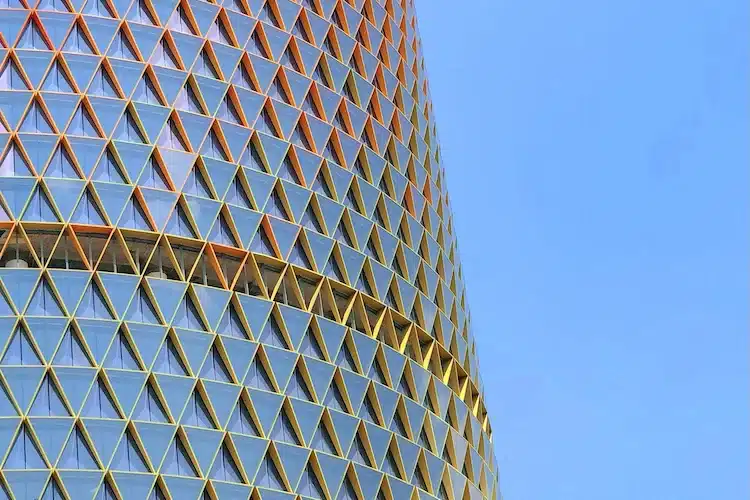
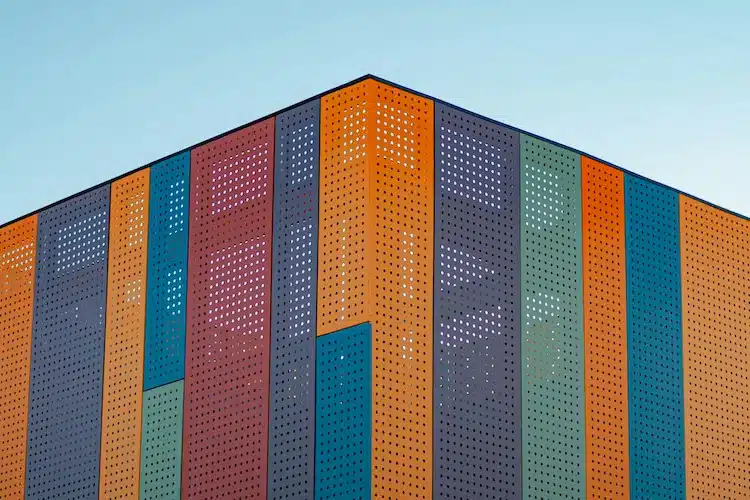
For building façades, however, color is more than a visual statement. It represents a performance attribute that must endure long-term exposure to environmental conditions. Spring is a season marked by stronger ultraviolet radiation, fluctuating day-night temperatures, and variable humidity, all of which continuously act on the materials and surface finishes of curtain wall systems.
Here, “curtain wall color” refers to the surface coatings on metal elements like aluminum panels and profiles, including hue, brightness, and gloss. The lasting performance of these finishes has a direct impact on the façade’s overall visual consistency.
In practice, the performance of a curtain wall must withstand multiple environmental challenges:
Even façades that look uniform at handover can fade, shift in color, or deteriorate if the materials or fabrication are not properly controlled.
The stability of a façade’s color influences its aesthetic presentation as well as the system’s durability and overall quality.
Different surface treatments respond differently to long-term environmental exposure:
♢PVDF Fluorocarbon Coating
Widely used on aluminum panels, it offers exceptional resistance to UV degradation and maintains color integrity, making it the preferred choice for high-durability applications.
♢Anodized Aluminum
Forms a surface layer bonded to the base metal. While generally durable, its consistent performance relies on precise process control and favorable environmental conditions.
♢ Powder Coating
Provides flexibility in color selection and cost-effectiveness. Its weather resistance, however, is contingent on the specific formulation and environmental exposure class.
Curtain wall color choices should be based not just on immediate appearance but also on a thorough evaluation of long-term durability.
Curtain wall finishes are tested to assess how well they maintain their color over time.
These standardized tests follow AAMA and relevant Chinese standards, and include:
These tests simulate long-term environmental stress in controlled conditions, providing a quantifiable evaluation of material performance and a reliable basis for engineering application.
The durability of curtain wall color is shaped by both the materials themselves and the effectiveness of manufacturing and quality control measures:
Even small variations can become visually noticeable on expansive curtain wall surfaces, affecting the integrity and perception of the façade.
Curtains walls are the building’s most exposed interface, and the stability of their appearance directly affects the long-term perception of quality.
Reliable color performance brings tangible benefits:
We treat curtain wall color as an integral part of system performance, not merely a decorative layer.
From material selection to surface treatment control, every stage is guided by the principle of long-term stability, ensuring that design intent endures over time.
Seasonal colors may change.
The color of a building should not.
Work with our engineering team to evaluate material selection, coating systems, and durability strategies for your next project.

Visibility and Perception in Architectural Facade Design In the commemorative context of ANZAC Day, the relationship between architecture and the city is closely linked to

Curtain Walls Under Tropical Water Exposure — Water as a constant environmental condition in Southeast Asia In Southeast Asia, building envelopes operate under a consistently

How Modern Facades Shape Space Through Light and Acoustics In a hotel lobby in the early morning, sunlight passes through the glass façade and settles

BIPV Façades for Nighttime Urban Spaces During Ramadan, urban rhythms across the Middle East shift noticeably. Daytime activity slows, while commercial and religious spaces become