Sunframe-Logo

Sustainable Façade Materials: From Material Choice to Building Performance

Introduction

The façade is one of the most material-intensive parts of a building envelope. Every material choice affects how the façade performs throughout its service life.

That makes a simple question surprisingly complex:

What makes a façade material sustainable?

Sustainable Façade Materials

What Makes a Façade Material Sustainable?

The sustainability of a façade material can be viewed through four key dimensions:

♦ Material Impact

Recycled content, raw material sources, manufacturing processes, and embodied carbon shape the environmental footprint of a material.

♦ Building Performance

Thermal insulation, solar control, daylight performance, and energy generation determine how effectively a material contributes to the building envelope during operation.

♦ Service Life

Durability, weather resistance, coating performance, maintenance requirements, and replacement cycles affect the long-term value of a façade material.

♦ Material Efficiency

Profile design, structural optimization, fabrication efficiency, and material use shape how efficiently resources are used in a façade system.

Environmental Product Declarations (EPDs) can provide additional product-level data for detailed environmental assessment.

1. Recycled and Low-Carbon Aluminum

Aluminum is widely used in curtain walls, windows, doors, and architectural cladding because of its low weight, durability, and flexible extrusion capabilities.

Recycled Content and Carbon

Recycled aluminum generally requires much less energy to produce than primary aluminum, making recycled content an important factor in reducing embodied carbon. Low-carbon primary aluminum takes a different approach by reducing emissions during primary production.

Engineering Efficiency

Material selection is only part of the equation. Profile geometry, mullion spacing, structural spans, module dimensions, wind loads, and fabrication methods all affect how much aluminum a façade system uses.

An efficient design achieves the required structural and façade performance with optimized material use. For aluminum façades, sustainability is therefore shaped by both the material itself and how efficiently it is engineered into the system.

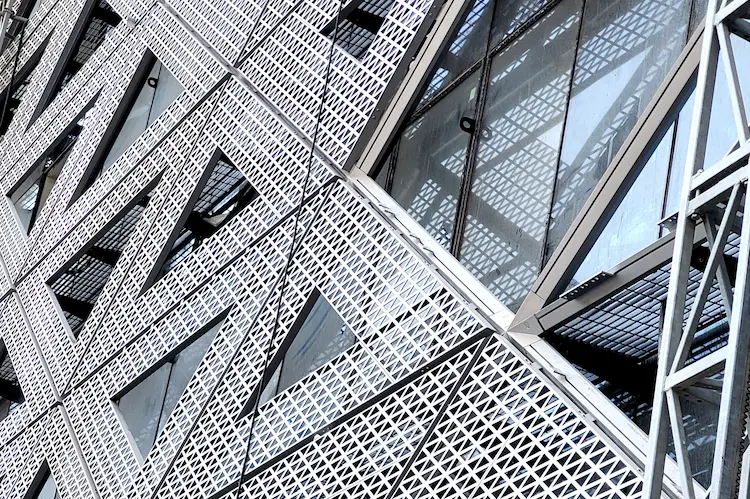
Recycled Aluminum Façade

2. High-Performance Glass

High-performance glass can improve the energy performance of glazed façades, particularly in buildings with large glazed areas.

Improving Building Performance

Low-E coatings, solar-control glass, and insulating glass units (IGUs) can reduce heat transfer and manage solar gain while supporting daylight and indoor comfort. Glass configuration should reflect the building’s climate, orientation, and performance targets.

Beyond the Glass

Spacers, edge seals, frame design, and façade orientation all contribute to the final thermal and solar performance.

The sustainability benefits of glazing therefore depend on both glass performance and the efficiency of the complete façade system.

3. BIPV Façade Materials

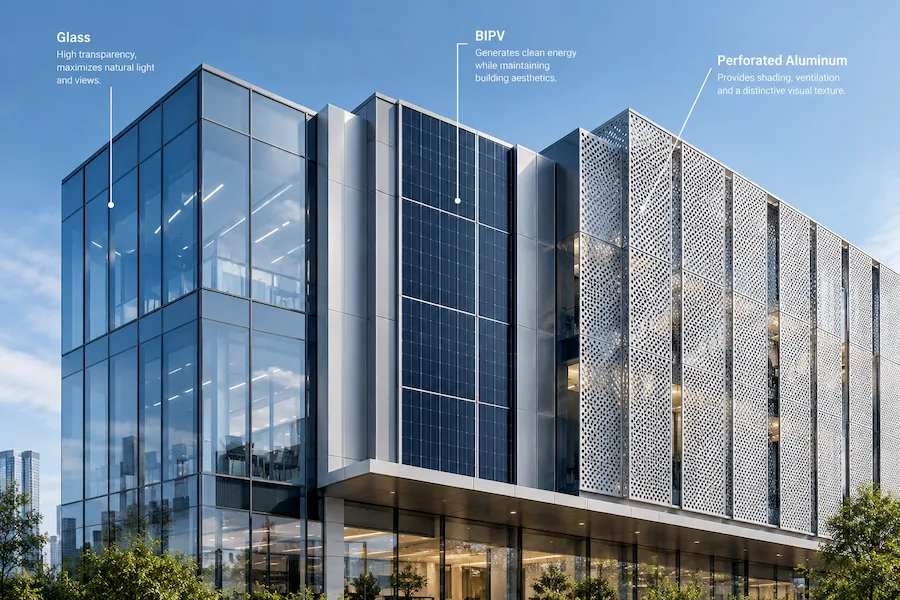
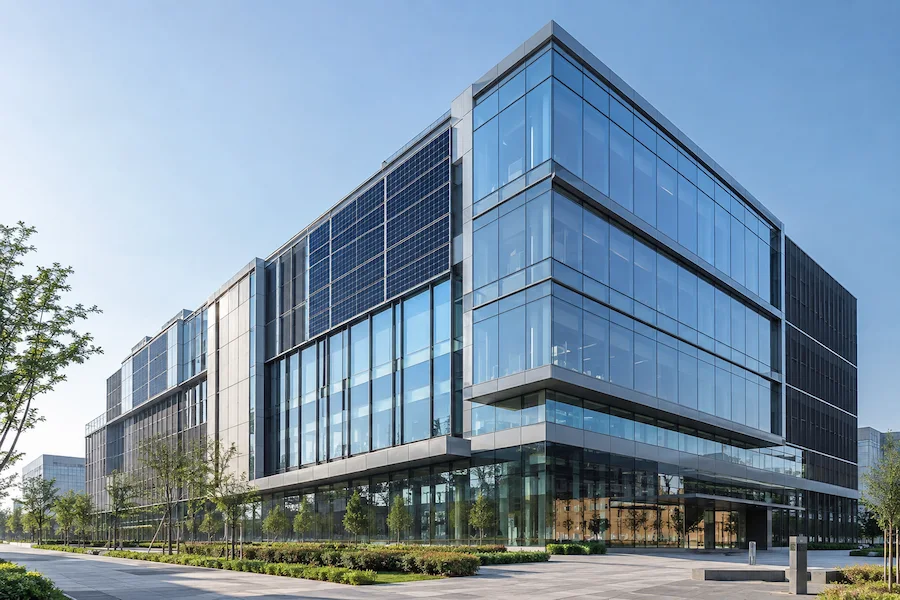
Building-integrated photovoltaics (BIPV) turn part of the façade into an energy-generating surface, combining photovoltaic technology with the building envelope.

Three factors are particularly relevant when evaluating BIPV as a sustainable façade material:

Photovoltaic Technology

Perovskite, CdTe, and monocrystalline silicon offer different combinations of power output, transparency, and application flexibility.

Glass Configuration

Different glass structures and transparency levels can accommodate varying requirements for daylight, visual appearance, solar generation, and façade performance.

System Integration

BIPV glass forms part of the surrounding curtain wall system. Framing, structural requirements, electrical connections, waterproofing, and installation details all contribute to the overall solution.

BIPV extends the role of façade materials beyond enclosure, adding renewable energy generation to the building envelope.

Sustainable Façade Design

Choosing Sustainable Façade Materials

There is no single material that suits every sustainable façade application. Material selection should reflect the project’s climate, performance targets, system requirements, and expected service life.

The key is to consider environmental impact alongside façade performance, material efficiency and service life, then assess how the selected material will perform throughout its lifecycle.

Sustainable façade design is therefore less about choosing a single “green” material and more about making appropriate material choices within the complete façade system.

Conclusion

Sustainable façade materials are best understood through their role within the complete building envelope. Material choices set the starting point, while engineering decisions determine how effectively those materials deliver performance over time.

The most meaningful sustainability gains often come from better decisions across the façade lifecycle, where material selection, system design, and building performance work together.

Work With SunFrame on Your Next Facade Project

If you are planning a residential, commercial, or infrastructure facade project and require curtain wall engineering, system development, or installation support, SunFrame can assist from early design coordination to project execution — helping ensure reliable, well-engineered facade performance throughout the building lifecycle.

Leave a Reply

Your email address will not be published. Required fields are marked *

This site uses Akismet to reduce spam. Learn how your comment data is processed.

Other Posts

Contact Us