Sunframe-Logo

The Future of Photovoltaic Glass

— Photovoltaic Glass and the Future of Energy Integration

As sustainable architecture and smart cities continue to evolve, photovoltaic glass is moving beyond its role as a passive energy-harvesting material. It is gradually extending into a building element with both functional and interactive potential.

SunFrame’s introduction of perovskite photovoltaic glass, with its high transparency and stable energy output, provides a practical foundation for this transition. At the same time, it opens up further possibilities for exploring a wider range of applications.

Beyond the material itself, the more relevant question is how photovoltaic glass can be meaningfully integrated into building systems and deliver consistent value in real-world use.

Future Application Perspectives of Photovoltaic Glass

Future Application Perspectives of Photovoltaic Glass

01 | Integrated Charging Within Building Envelopes

 In addition to power generation, façade systems may support localized energy supply for small devices.

 Selected areas could incorporate wireless charging or near-field energy transfer modules, allowing devices to draw power through close proximity.

 In low-power, short-duration scenarios, this form of distributed energy use becomes technically viable.

This direction is more suited as a supplementary function, where its near-term value lies in user experience and scenario-driven applications.

02 | Smart Glazing and IoT Integration

Photovoltaic glass can function as a node within a building’s energy network, operating in coordination with intelligent systems.

It can respond to daylight conditions by adjusting transparency or shading and simultaneously supply power to sensors and low-energy devices.

This supports localized energy distribution and system-level coordination within buildings.

With the continued expansion of IoT devices, this approach presents a relatively strong case for near-term implementation.

03 | Temporary Spaces and Mobile Energy Solutions

Modular photovoltaic panels can be introduced into outdoor workspaces or temporary structures, combining daylight access with energy supply.

They can provide auxiliary power for laptops, lighting, and similar equipment, reducing reliance on fixed infrastructure.

In temporary or lightweight usage scenarios, the practical value of such solutions may be underestimated.

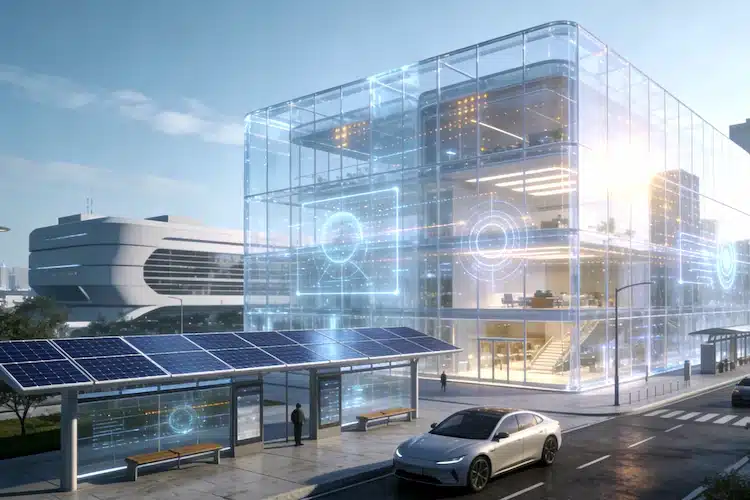
04 | Energy Self-Sufficiency in Public Infrastructure

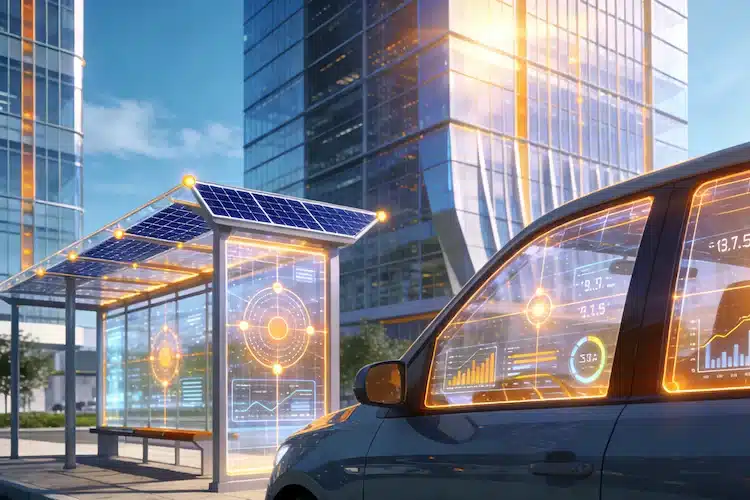
Urban installations such as shelters and canopies can incorporate photovoltaic glass to support their own operational needs.

This includes lighting, display systems, and, where appropriate, basic charging interfaces.

While technically straightforward, broader adoption depends on coordination within infrastructure planning and energy management systems.

Energy Self-Sufficiency in Public Infrastructure

05 | Integration into Transportation Systems

High-transparency photovoltaic glass may be applied to vehicle roofs or side glazing to provide auxiliary energy for onboard systems.

This approach maintains visual and daylight qualities while improving overall energy utilization.

In the near term, its role remains supportive rather than primary within vehicle energy systems.

06 | Interactive Building Energy Interfaces

Photovoltaic façades can be paired with digital systems to present real-time energy performance.

Through integration with mobile applications, users can engage with and understand the building’s energy behavior.

Here, the primary value lies in perception and communication, rather than energy output alone.

Outlook

Building on the performance characteristics of perovskite photovoltaic glass, SunFrame is focused on exploring its potential within intelligent, interactive, and visible energy systems in architecture.

In the longer term, the value of photovoltaic glass may not lie in replacing conventional energy systems, but in acting as a distributed node within a broader building energy network.

Over time, the boundaries separating building façades, public infrastructure, and urban systems will blur, with energy circulating efficiently and being coordinated across diverse urban layers.

SunFrame will continue to monitor these developments closely, align emerging opportunities with practical engineering requirements, and explore viable pathways for creating more sustainable and responsive buildings.

Explore BIPV Possibilities

Explore how tailored BIPV solutions can transform architectural design and energy integration for the buildings and cities of tomorrow.

Leave a Reply

Your email address will not be published. Required fields are marked *

This site uses Akismet to reduce spam. Learn how your comment data is processed.

Other Posts

Contact Us