Sunframe-Logo

Perforated Facade Engineering Risks: Beyond the Pattern

SunFrame Perforated Facade Engineering Risks

Compared with conventional curtain wall systems, perforated facades remain relatively immature from an engineering perspective. Their highly customized nature means that each project is, in technical terms, almost a unique “non-standard solution.”

As such, a perforated facade is never simply a matter of stacking materials or choosing forms; it is an engineering system that imposes higher demands on structure, safety, construction, and maintenance. From SunFrame’s engineering practice, the following provides a systematic review of the core technical challenges and foreseeable development trends of perforated facades.

1. Visual Integrity: When Nodes Become Part of the Façade

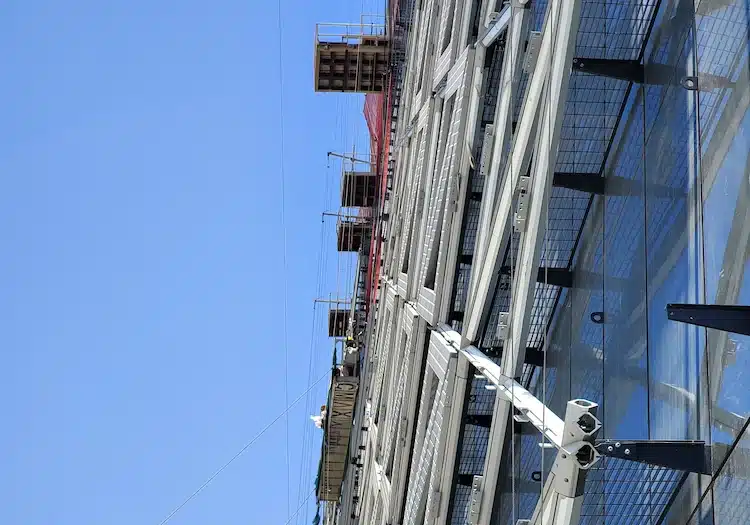
One of the most prominent engineering features of perforated facades is that their construction is almost fully exposed to view. Unlike conventional curtain walls, where cover plates or decorative elements can soften the presence of nodes, perforated systems typically present:

  • Visibility from both interior and exterior.
  • Connection nodes that actively participate in façade expression.
  • High correlation between construction precision and visual quality.

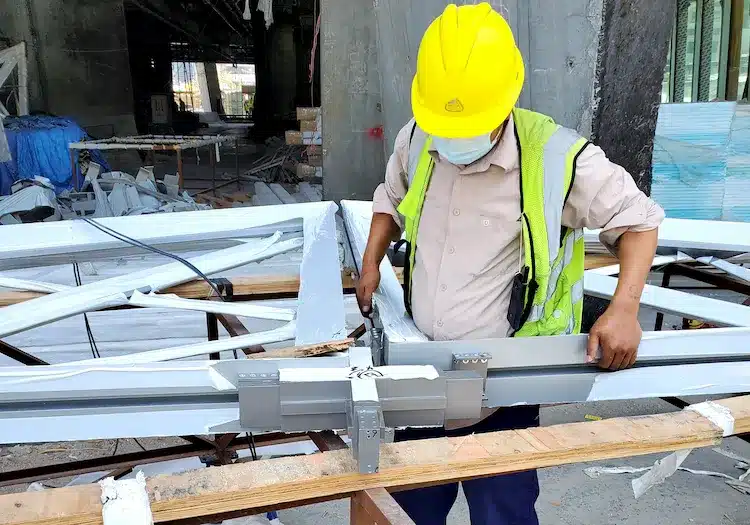
This means that any design error in the nodes is not only a structural or safety concern but also a façade quality issue. Nodes in perforated systems are no longer “hidden engineering” but an inseparable part of the façade design.

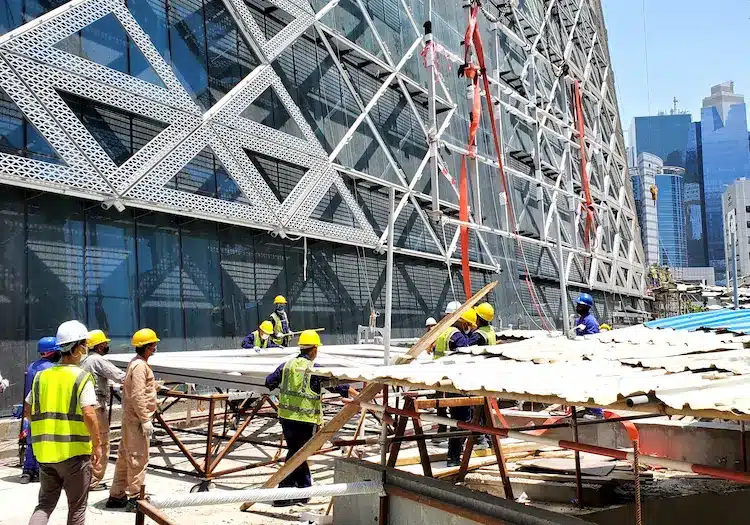
Moreover, stability during construction is especially critical. Incomplete units may be exposed to uneven loads at height or on cantilevers, and insufficient temporary support or improper assembly sequencing can cause local deformation or stress concentration. Therefore, construction plans, temporary supports, and sequencing must be considered in parallel with design.

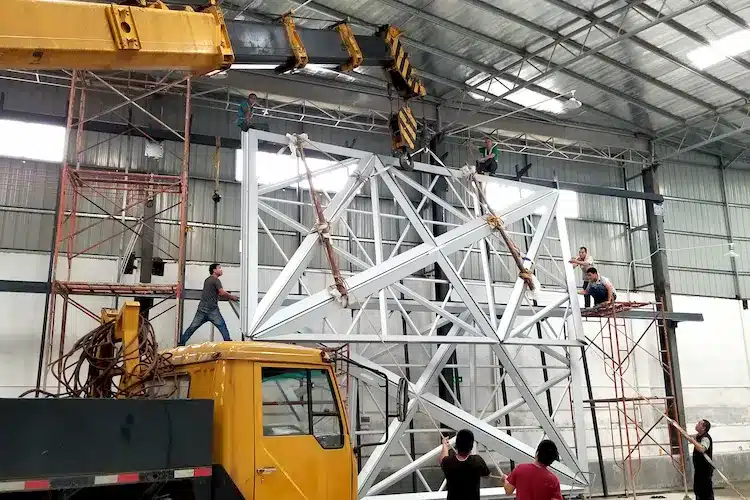
SunFrame Precision Node Assembly On Site

2. System Non-Standardization: Project-Level Customization as the Norm

Within current curtain wall product lines, truly mature and scalable perforated systems are extremely limited. Most projects still rely on:

  • Project-level structural analysis.
  • Customized node design.
  • Specific verification for the unique building conditions.

Non-standardization increases the coordination complexity among design, manufacturing, and construction, and amplifies the risk of early-stage misjudgments affecting later implementation.

3. Misjudging Waterproofing: Perforations Do Not Provide Water Protection

A common but hazardous misconception is to treat perforated facades as weatherproof systems. In reality:

  • Perforated elements themselves do not carry waterproof responsibilities.
  • Real waterproofing risk is concentrated at interfaces with the main curtain wall.
  • Waterproofing logic generally relies on continuous secondary defenses, not individual components.

From an engineering perspective, perforated elements should be regarded as auxiliary components, with interface treatment between them and the main envelope being the key control point for waterproofing.

Perforated Facade Waterproofing Interface Structure

4. Structural and Wind Load Uncertainty

Structural calculation for perforated facades is not simply equivalent to “lightened façade elements.” Their specificity mainly involves:

  • The impact of perforation ratios on overall stiffness and stress distribution.
  • Irregular openings making shape coefficients difficult to apply from empirical values.
  • Complex reaction paths under cantilevered or eccentric arrangements.

In high-rise or supertall buildings, if these uncertainties are not fully identified, they may gradually appear in wind-induced vibration, node fatigue, or long-term deformation. During construction, temporary loads and hoisting sequences must be strictly controlled to ensure units not yet fixed do not experience uncontrolled stress.

5. Material Strength Reduction After Perforation

From SunFrame’s engineering assessment, many potential safety issues in perforated systems do not stem from material deficiencies, but from underestimating performance changes after material perforation:

  • Reduced effective cross-section.
  • Localized stress concentration.
  • Fatigue and brittle failure risks around holes.

These factors make materials that were originally “sufficiently safe” more sensitive in perforated form, significantly reducing tolerance to design assumptions and construction deviations.

6. Fabrication Precision and On-Site Assembly Variance

Perforated components typically feature high geometric complexity, requiring precise fabrication. However, in practice:

  • Errors accumulate between digital models and physical components;
  • Installation sequencing and temporary load conditions are often underestimated;
  • Minor deviations can be visually amplified.

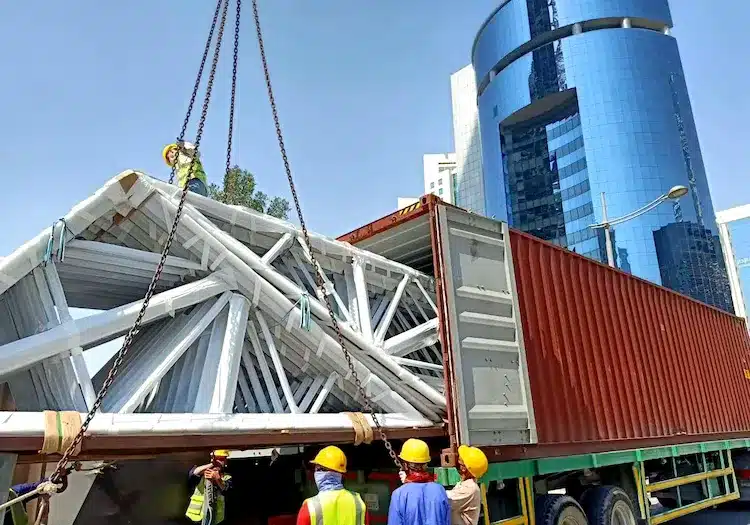
This necessitates consideration of assembly logic during design, rather than solely achieving “geometric closure” on paper. Construction monitoring is equally important, with detailed temporary supports, hoisting sequences, and acceptance procedures required to ensure each unit remains stable before final fixation.

SunFrame On Site Pre-assembly of Non-Standard Units

7. New Materials and Digital Fabrication: Opportunities and Risks

3D printing, digital molds, and new composite materials provide unprecedented possibilities for perforated facades. From an engineering perspective, however, these technologies also involve:

  • Limited long-term durability data.
  • Uncertainty in connection methods and maintenance strategies.
  • Lack of standardized calculation paths or verification norms.

New materials do not inherently reduce engineering risk; they often shift risk to areas not yet fully validated.

8. Perforation × Photovoltaics: An Engineering Concept

Integrating perforated systems with photovoltaic functionality is a frequently discussed direction. However, at this stage, it should be regarded as an engineering concept, rather than a mature solution.

Feasibility depends on:

  • Actual impact of perforation on energy generation.
  • Electrical system and curtain wall safety separation.
  • Clear maintenance and replacement strategies.
  • Cautious evaluation is necessary in the absence of systematic verification.

9. Smart, Adaptive Perforated Systems: Engineering Preconditions Over Conceptual Appeal

Variable-angle or dynamically responsive perforated systems theoretically offer benefits for shading and energy efficiency. However, engineering viability requires:

  • Reliable mechanical system design.
  • Verifiable durability and fatigue performance.
  • Clear, executable maintenance logic.

Without these foundations, smart systems often become new sources of risk.

Conclusion|Engineering Rationality as the Foundation for Long-Term Value

For SunFrame, perforated facades are not tools for formal experimentation; they are engineering systems that must be treated seriously. A successful perforated façade balances architectural expression with engineering rationality to ensure long-term stability.

Related System Guide: [Engineering the Void: How SunFrame Redefines Excellence]

From risk to solution: Explore our material decision matrix and specialized metal systems.

Mitigate Perforated Facade Risks with SunFrame

Perforated facades are highly customized systems. SunFrame provides engineering analysis, material selection, fabrication, and on-site support to ensure safe, buildable, and visually precise results.

Leave a Reply

Your email address will not be published. Required fields are marked *

This site uses Akismet to reduce spam. Learn how your comment data is processed.

Other Posts

Contact Us