How Modern Facades Shape Space Through Light and Acoustics?
How Modern Facades Shape Space Through Light and Acoustics In a hotel lobby in the early morning, sunlight passes through the glass façade and settles
When people admire the shape of a tower or the clarity of a glass facade, few notice the underlying system that makes it possible.
For international facade projects, success goes far beyond engineering—it relies on a fully coordinated chain covering design, production, inspection, logistics, packaging, documentation, and on-site communication.
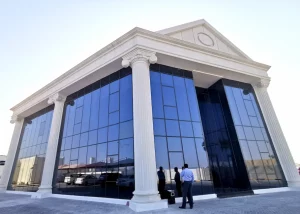
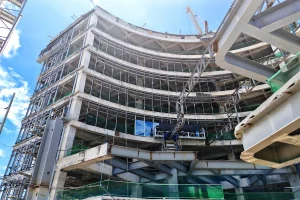
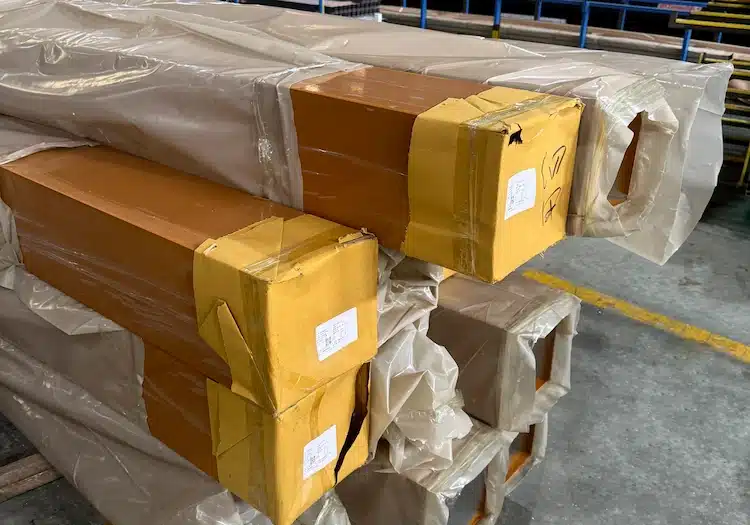
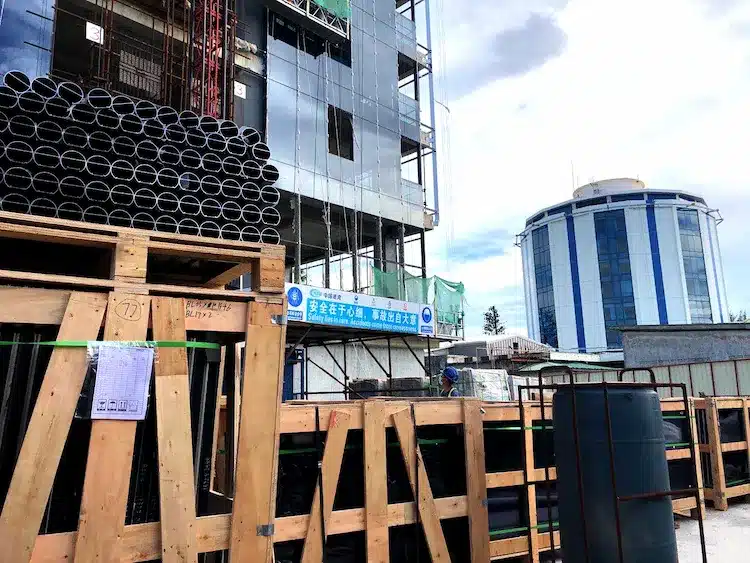
At the Pegasus Five-Star Hotel in Georgetown, Guyana, SunFrame engineered and installed 20,000 ㎡ of unitized curtain wall with a GL-50 concealed frame. Factory-prefabricated panels were meticulously calibrated to on-site tolerances, shipped in export-grade, impact-resistant crates, and installed in precise sequence for seamless alignment.
Through more than a decade of exporting facade systems worldwide, SunFrame has learned a simple truth:
A facade becomes a building facade not through one factory, but through a synchronized global supply chain.
Every country has its own installation methods, safety standards, and tolerances. Our design team’s role goes beyond technical drawings:
★ Re-segmenting units and mullions based on installation feasibility
★ Matching production dimensions to real on-site tolerances
★ Recommending installation sequences
★ Choosing glass sizes, panel divisions, and profiles based on real material availability
In other words:
The drawing is not the deliverable. It is the starting point of the entire supply chain.
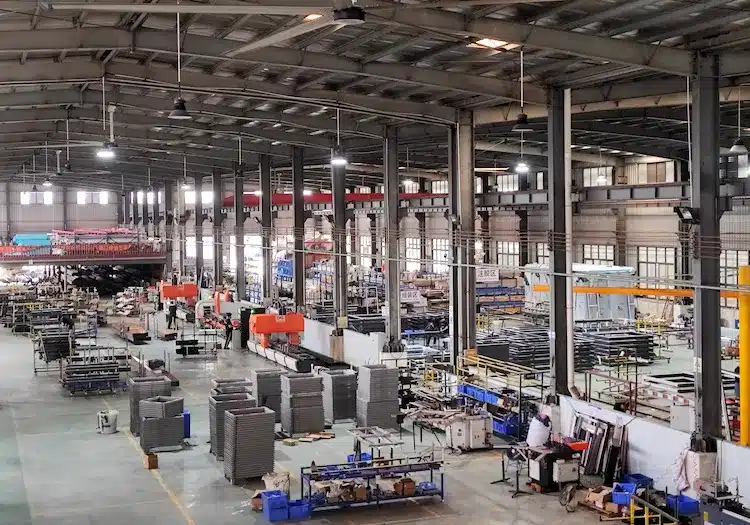
Many delays in cross-border projects come from mismatched production timing. SunFrame manages production as a closely coordinated system:
▶ Manufacturing by floors and installation zones
▶ Unified Bill of Materials for glass, profiles, hardware, sealants
▶ Dedicated lines for curved, oversized, or complex components
▶ Three-stage QC: incoming materials, in-process inspection, and pre-shipment inspection
Every batch is produced with purpose— Not just manufactured, but produced in the order the site actually needs.
Common reasons for delays in international facade projects:
☛ Oversized glass damaged during trans-shipment
☛ Unitized modules distorted during handling
☛ Mixed hardware batches causing on-site shutdown
To address this, SunFrame established a full export-grade packaging system:
✔ QR-coded tracking for each unit
✔ Custom shock-resistant wood crates for glass
✔ Hardware packed according to installation sequence
✔ Project-level—not factory-level—packing lists
This ensures the site receives not only the products, but a ready-to-install workflow packed into each crate.
SunFrame maintains a three-layer communication structure with contractors, consultants, and owners:
♦ Daily Updates: Production, glass status, incoming materials
♦ Weekly Coordination: Joint meeting with design/engineering/production/logistics
♦ Milestone Reports: Risk registers and mitigation plans
This approach is why our overseas projects remain consistent—even across different countries.
Engineering alone does not define a facade system. Its real quality depends on:
① Understanding global site conditions
② A harmonized supply chain
③ Predictable production
④ Export-grade logistics and packaging
⑤ Transparent, continuous communication
The Pegasus Hotel project demonstrates how these elements combine to deliver a high-performance, aesthetically seamless curtain wall system on schedule, validating SunFrame’s approach in real-world international projects.
At SunFrame, our value is not only in manufacturing systems, but also in making every overseas client confident that the project will be delivered exactly as promised.
From engineering and production to packaging, logistics, and on-site coordination, SunFrame supports international facade projects with a fully integrated delivery system.

How Modern Facades Shape Space Through Light and Acoustics In a hotel lobby in the early morning, sunlight passes through the glass façade and settles

The Future of Photovoltaic Glass — Photovoltaic Glass and the Future of Energy Integration As sustainable architecture and smart cities continue to evolve, photovoltaic glass

How Façades Drive Brand Activation and Emotional Experience High-quality façades do more than define a building’s exterior—they shape the way people see, move through, and

BIPV Façades for Nighttime Urban Spaces During Ramadan, urban rhythms across the Middle East shift noticeably. Daytime activity slows, while commercial and religious spaces become