Lunar New Year, Proven Reliability: Custom Façade Engineering & Delivery
Lunar New Year, Proven Reliability: Custom Façade Engineering & Delivery To much of the world, the Lunar New Year is a time to slow down,
In many countries, Republic Day is a moment to look back on history and celebrate achievements. For Guyana, a nation still in a phase of rapid development, it serves as a reminder to shift our focus from what has already been completed to which decisions will continue to hold their value over time.
In the building industry, this perspective is especially important. Buildings remain, facades age, and what is ultimately tested is not the visual impact at the time of completion, but long-term stability, durability, and sustainable performance.
Through our project experience in Guyana, we have gradually formed a clear engineering judgment:
The advancement of a facade system is not determined by how complex the technology is, but by whether that technology is genuinely required by the project.
As Sunframe’s local branch in Guyana, YLJ Sunframe Glass & Aluminum INC. has been involved in a wide range of building types. Two representative projects clearly illustrate this logic of technical selection and restraint.
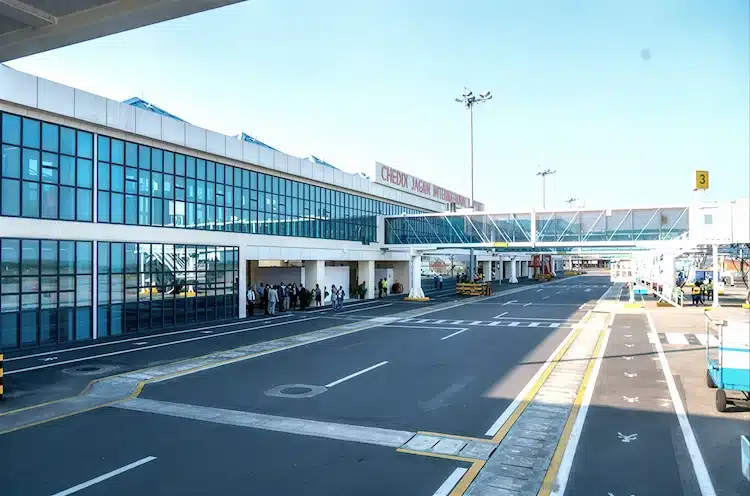
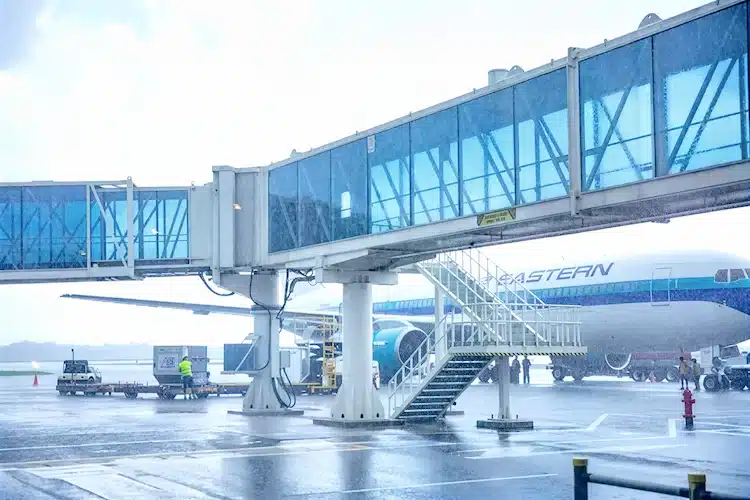
At the CJIA expansion project, we were responsible for approximately 6,448 m² of exposed-frame curtain wall and aluminum cladding systems, covering design, fabrication, and installation. As a national transportation facility, the project prioritized durable performance under heavy use and tropical climate rather than emphasizing complex facade forms.
Based on these priorities, the project adopted proven and reliable configurations, including Low-E insulated glazing, laminated safety glass, and fluorocarbon-coated aluminum profiles. Meanwhile, facade details that would require extremely high construction tolerances or pose long-term maintenance risks were deliberately avoided.
This approach did not represent a reduction in technical standards. Rather, it was a conscious narrowing of system complexity after the usage conditions had been clearly defined.
Here, “sufficient and stable” mattered more than “more technology added.”
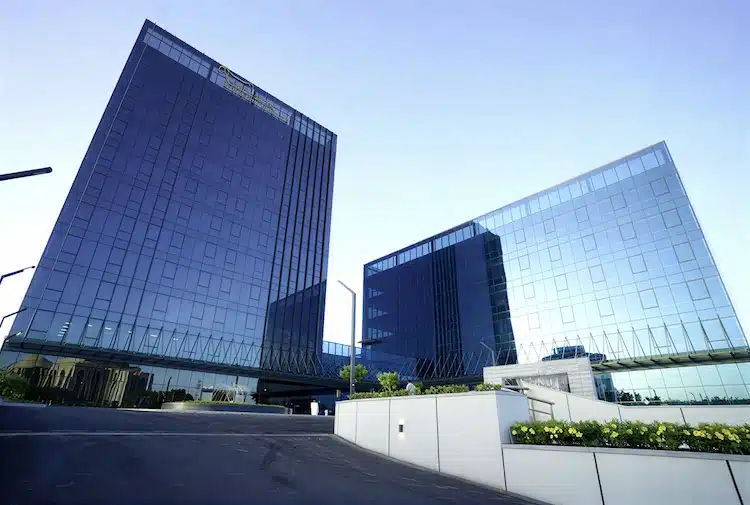
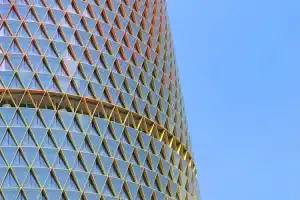
By contrast, the Pegasus Seaside Five-Star Hotel in Georgetown presented different priorities. Higher demands were placed on facade continuity, airtightness, wind performance, and construction schedule. Therefore, Sunframe delivered approximately 20,000 m² of unitized hidden-frame curtain wall systems.
In this case, the choice of a unitized system was driven by clear engineering considerations, not a desire for structural complexity or visual impact.
Here, system precision was not the goal. Instead, it was the outcome naturally derived from functional requirements.
The contrast between these two projects demonstrates a critical point: in a market like Guyana, there is no single “high-end” facade solution. What truly matters is the ability to judge, within a specific context, which technologies are worth introducing and which layers of complexity are unnecessary to carry.
In emerging markets, “technical over-engineering” often occurs not due to a lack of capability, but because of a shift in where decisions are made.
As an international engineering partner, it is easy to regard systems proven in mature markets as inherently superior and to apply them directly. However, in Guyana, construction conditions, maintenance capabilities, and supply-chain structures do not always support the long-term operation of highly complex systems.
Without sound judgment of the operating environment, advanced technology itself can become a source of risk.
Sunframe’s establishment of a local branch in Guyana is not merely about execution efficiency. More importantly, it allows critical engineering decisions to be made earlier and closer to reality.
When design choices are informed by actual construction conditions, operational capabilities, and long-term maintenance considerations, questions such as “Is this really necessary?” become much clearer.
For countries still in a growth phase, restraint often matters more than pioneering gestures. Knowing when to introduce advanced systems is crucial. More importantly, it is necessary to recognize when to stop and choose solutions that are robust, maintainable, and sustainable over time.
Republic Day invites reflection on national development. At the same time, it also calls on engineering professionals to reassess their responsibilities. For us, facade engineering is never about short-term presentation or symbolic achievement. It is a enduring commitment that must stand up to the test of time.
The number of completed projects is certainly something to be proud of. However, what is truly worth celebrating is their quality. In other words, these facades continue to perform reliably years later and remain faithful to the judgments made when they were designed.

Lunar New Year, Proven Reliability: Custom Façade Engineering & Delivery To much of the world, the Lunar New Year is a time to slow down,

Rainy Season Resilience: Integrated Facade Drainage Lessons from the Brazilian Carnival Challenge The Brazilian Carnival is not only a globally renowned cultural festival but also

Fit and Resilience: The Design Logic of Facade Systems in Australia Architecture in Australia Begins with Environmental Considerations When designing buildings in Australia, many decisions

2026 Façade Systems: From Visual Expression to Long-Term Performance Observations on Façade Technology, Operation, and Maintenance The turn of a new calendar year is often