Aluminum Panel Curtain Wall Construction | Technical Execution Guide
Aluminum Panel Curtain Wall Construction — Key Technical Points for Reliable On-Site Execution In real-world curtain wall projects, the facade functions as a secondary envelope.
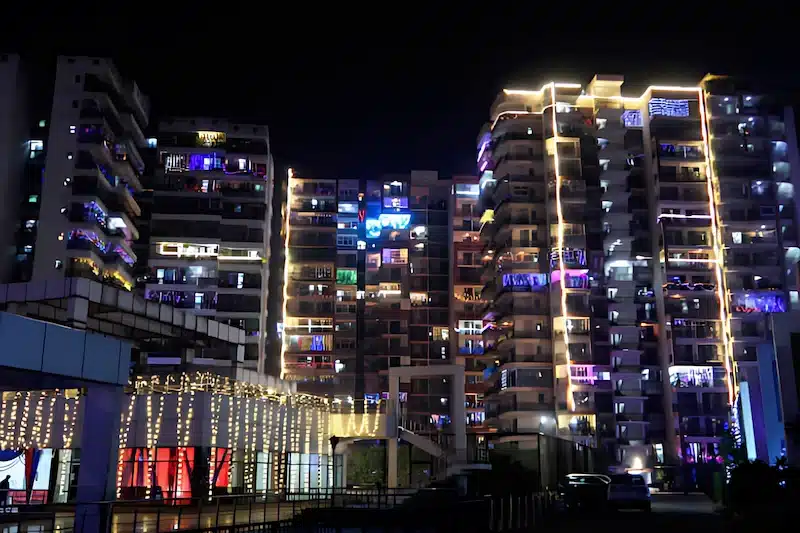
In India, Diwali symbolizes the return of light and hope.
As festive lamps move beyond doorsteps and window sills to shimmer across urban facades, a dialogue between tradition and modernity about light and architecture quietly unfolds.
At SunFrame, we believe that curtain walls are not just a building’s exterior, but a canvas for the art of light and shadow. By integrating materials, structures, and lighting, we turn buildings into “active lights” rather than “forced lights,” extending the city’s night sky into an expression of the festive season.
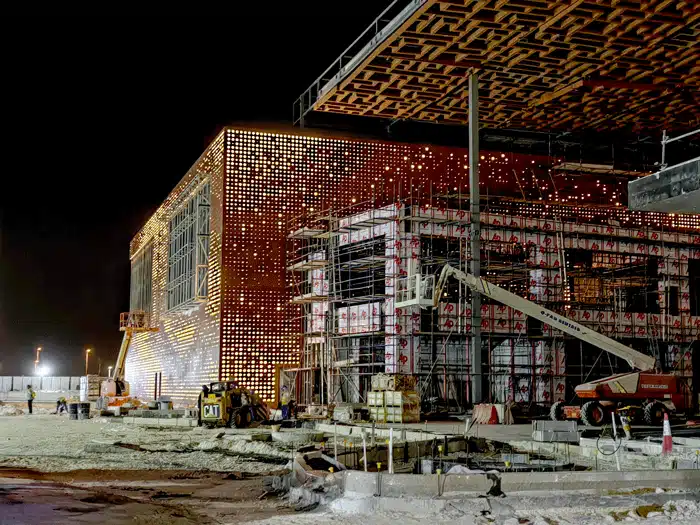
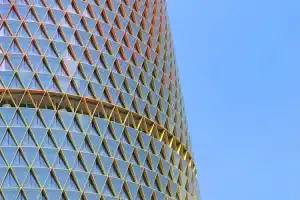
The perforated aluminum panels lend the building’s façade a delicate rhythm reminiscent of Diwali’s rangoli art.
Light flows through countless tiny apertures, forming programmable patterns of shadow and brilliance. It seelike luminous blessings drifting across the skyline.
In SunFrame’s Mashrabia-inspired projects, this concept finds its most refined form: daylight reveals texture and depth; come night, movement and radiance take their place, uniting traditional craftsmanship with contemporary engineering.
If aluminum panels sculpt light, glass embraces it.
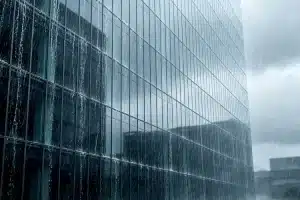
Through precise control of light-source placement and glass translucency, SunFrame enables entire buildings to radiate a soft, inner glow—like magnified modern lanterns that evoke openness, wisdom, and hope.
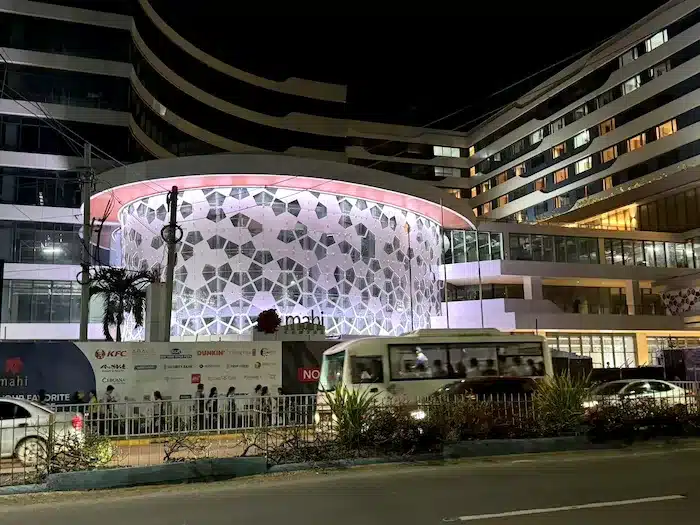
In the MAHI project in the Philippines, precision in facade engineering and lighting design brings forth a serene composition of light—where glass learns to glow.
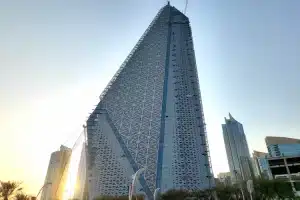
Among SunFrame’s signature works, the Burj Al Mana Tower and the MAHI Project best embody our philosophy of the “luminous facade.” They both have combined perforated aluminum panels and glass curtain walls in harmony, so light and shadow become the architectural language of the exterior.
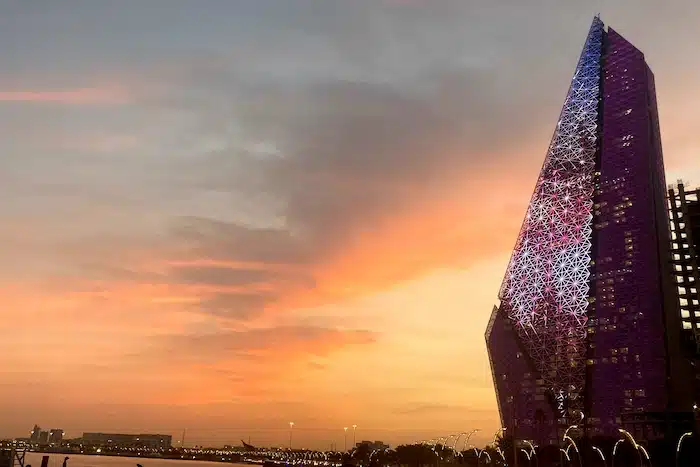
Located in Doha, Qatar, the 56-story Burj Al Mana Tower features approximately 42,000 m2 of glass curtain wall and 37,000 m2 of Mashrabia-patterned aluminum panels. You can see the glass facade provides a bright, transparent view during the day. When night falls, the backlighting brings the geometry to life, dressing the tower in a flowing garment of light, its own festival attire. Precision-cast components and digitally cut panels ensure seamless alignment between glass and metal. And this can create a unified and balanced nighttime effect.
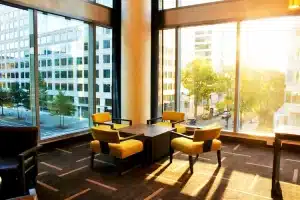
At the MAHI project, perforated aluminum panels overlay the glass facade around the atrium. Together, they create a dynamic stage of light and shadow throughout the day. Moreover, the panels on the second and third floors cast intricate shadows by daylight. Then they come alive at night as integrated lighting interacts with the reflective and translucent glass surface. The result is a facade that feels both gentle and rhythmic. High-performance glazing, strict wind-resistance standards, and precise installation tolerances ensure that the visual clarity of the lighting remains true to design intent.
Through these projects, SunFrame will keep exploring how technology and tradition coexist within light-driven architecture.
The light of Diwali has traveled far—from earthen lamps to architectural facades, from clay to metal and glass. While the materials have evolved, the human yearning for illumination remains unchanged. Such an evolution mirrors the journey from cultural inspiration to engineering reality.
SunFrame translates this timeless sentiment into architectural expression, using precision perforation and translucent facade design to make light the soul of every structure.
As the festive lights come alive once more, may every building designed by SunFrame stand as an enduring celebration in the city, bearing witness to the most brilliant fusion of tradition and modernity.
SunFrame reimagines curtain walls as vehicles for light and culture, letting buildings tell the stories of their cities through the language of illumination.

Aluminum Panel Curtain Wall Construction — Key Technical Points for Reliable On-Site Execution In real-world curtain wall projects, the facade functions as a secondary envelope.

Photovoltaic Glass Applications in Building Systems Across Regions —From Southeast Asia to the Middle East Photovoltaic technology is shifting from external power equipment to an

Shaping Al Mana’s Architectural Identity: From High-Rise to Headquarters Introduction From the soaring towers of Doha’s skyline to the intimate spaces of its corporate headquarters,

How SunFrame Develops Overseas Markets: Starting from Being on the Ground “Understanding local realities before defining system solutions” In developing overseas markets, the real challenge