Cultural Architectural Systems in the GCC: Glass and Aluminum Material Logic
Cultural Architectural Systems in the GCC: Glass and Aluminum Material Logic 1. Cultural architecture in the GCC operates through layered material logic In the GCC
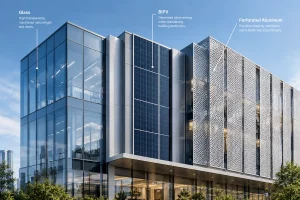
Over the past few decades, the designs and technology of curtain wall has developed into a diversified system. Innovation on materials from the traditional ones like glass, aluminum panels, and stone to the modern ones such as terracotta panels and titanium-zinc sheets, continues to drive the field forward. As one of the significant parts of a building’s envelope system, curtain walls have following features:
1.1 They can form a complete structural system to protect the interior building to a certain extent and also guarantee the stability.
1.2 What’s more, they only need to hold their own weight because they are independent of the building’s primary structure.
1.3 Most obviously, they play a decisive role in shaping the building’s exterior appearance.
The façade is in fact an interface between a building and its external environment. Therefore, its design should adhere to the following points:
2.1 Conceptual Expression
The facade design should reflect the building’s function and aesthetic vision.
2.2 Visual Impact
The elements of facade must Harmonize color, texture, proportion, and rhythm.
2.3 Cultural Relevance
The design must align with the local mainstream aesthetics and cultural context.
After learning about the key elements in the facade design, let’s dig into the core principles of curtain wall design further.
☛ As a modern element, there is no doubt that the curtain wall design should keep abreast with the prevailing design trends.
☛ Besides, it is also necessary to utilize innovative materials and technologies in the curtain walls.
☛ It’s better to keep forward-thinking without being overly radical in the curtain wall design.
☞ In order to integrate with the local community, the design should respect local architectural traditions.
☞ In addition, it must incorporate the specific cultural elements.
☞ What is also important is that the design can respond to regional climate conditions.
☞ It is not recommended to be too unique in curtain wall design. It must balance individuality with universality.
☞ The design should take the public acceptance into account.
☞ Finally, maintaining harmony with the surrounding environment is also very necessary.
Now, you may wonder why the curtain wall design must follow those rules and why it is so critical for the modern architecture. So let’s find out its practical value.
☞ Inspire architects with broader creative possibilities
☞ Offer technical expertise
☞ Optimize design details and integration
☞ Minimize conflicts between design and structure
☞ Control construction costs
☞ Ensure project timelines are met
☞ Unify performance and visual expression
☞ Enhance overall building quality
☞ Improve user experience and satisfaction
Curtain wall design has evolved beyond mere decoration to become a critical factor influencing the overall quality of architecture. The successful one must balance contemporary relevance, regional identity, and public expectations, while leveraging technological innovation to unify function and form. As curtain wall systems continue to advance, they will open up new possibilities for creative and high-performance architectural design.
If you are planning a residential, commercial, or infrastructure facade project and require curtain wall system engineering, fabrication, or installation support, SunFrame can assist from system development to project execution, ensuring high-quality facade solutions for your project.

Cultural Architectural Systems in the GCC: Glass and Aluminum Material Logic 1. Cultural architecture in the GCC operates through layered material logic In the GCC

Smart Façade Systems and Urban Skin Design Introduction: Façade as an Adaptive Interface Revolution Day in Argentina is often associated with systemic transition and structural

Solar Shading in Modern Glass Facades: Balancing Daylight and Heat Gain Introduction Modern glass façades have become a defining feature of contemporary architecture, driven by

Curtain Wall Maintenance and Performance Degradation Management Curtain wall systems continue to evolve after completion. Once a building enters operation, environmental exposure and material aging