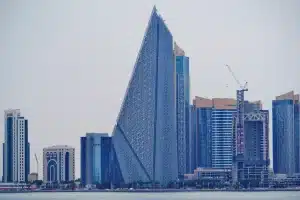
Burj Al Mana Tower: The Story Behind Its Complex Façade and Engineering
Burj Al Mana Tower: The Story Behind Its Complex Façade and Engineering Rising over Doha’s West Bay, the Burj Al Mana Tower has a story
As green building shifts from trend to standard, the building’s “skin” is undergoing a transformation. No longer static boundaries, facades today are being imbued with life, tangible and breathing.
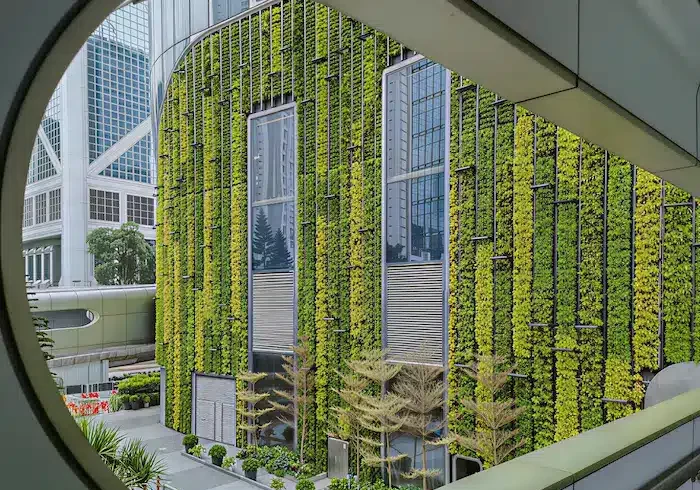
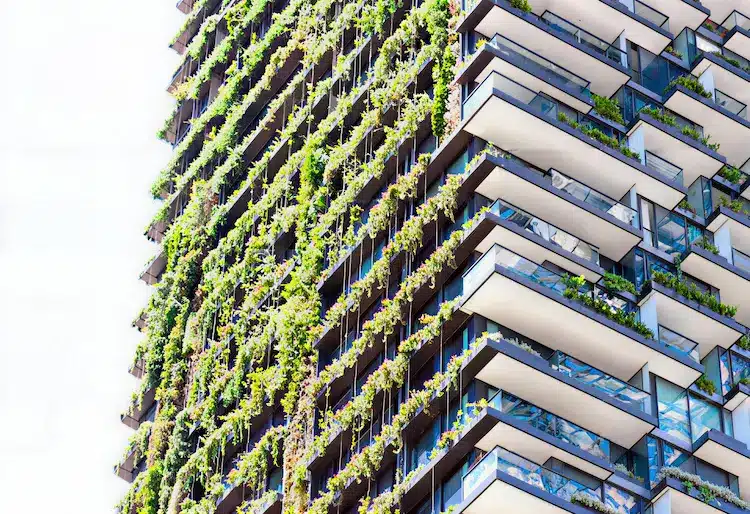
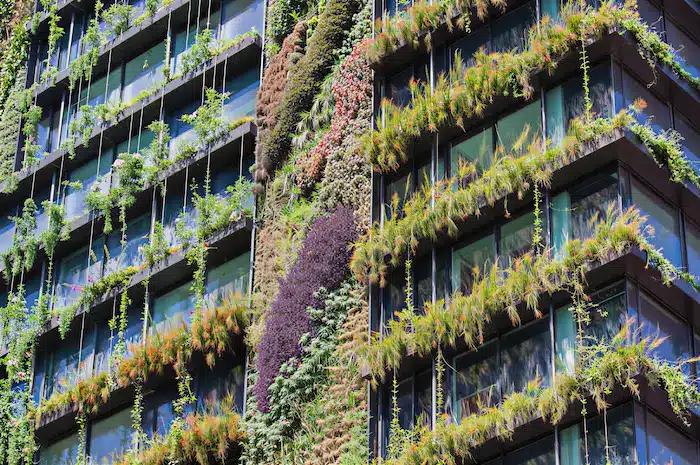
In living façades, plants can climb along the structure and take root within the framework. In doing so, they reshape how cities manage shading, microclimates, biodiversity, and even visual expression.
Among the many approaches, one stands out for its subtle elegance:
curtain walls that serve both as decorative surfaces and structural supports for vegetation.
These façades bring texture, dynamic vitality, and genuine ecological value, yet they also pose a crucial engineering question. Should the framework supporting this vertical greenery be made of aluminum or stainless steel?
We break down both materials in terms of performance, durability, sustainability, and design intent, and share real-world examples that highlight best practices.
Living façades serve more than decorative purposes. They offer:
▶ Natural shading that reduces heat gain and cooling loads
▶ Improved air quality through plant respiration
▶ Stormwater management, especially in dense cities
▶ Noise absorption, particularly with layered vegetation
▶ Enhanced biodiversity that attracts birds and pollinators
▶ A softer civic presence, reducing the “hardness” of urban streetscapes
Because plants require structure, many architects integrate perforated screens, mesh panels, fins, or lattice systems into curtain walls — turning façades into trellises. At this stage, material choice plays a crucial role in balancing structure and greenery.
Living façades introduce additional loads that traditional façades do not carry:
Over time, these loads add up, making it important for the framework to remain light for safety and efficiency.
Aluminum weighs roughly one-third as much as stainless steel.
Once you factor in soil, water, and plants, the difference becomes even clearer.
Stainless-steel supports inevitably increase weight and this means more stress on anchors and the curtain wall.
Aluminum, by contrast, keeps the system lighter, reduces structural strain, and simplifies installation.
For long-term living façades, it provides a stable, efficient framework without adding unnecessary load.
Living façades create a humid micro-environment filled with:
While stainless steel is corrosion-resistant, prolonged exposure to constant humidity, soil acidity, and organic buildup increases the risk of:
Aluminum comes with a self-forming oxide layer that resists moisture.
With powder coating, PVDF, or anodized finishes, it remains stable even in:
This predictable behavior reduces long-term maintenance and ensures façade performance.
Living façades today are not purely functional — they often double as visual features, using patterns and geometry to define architectural character.
Perforations, curves, shading screens, parametric lattices, and cultural patterns (like Mashrabiya designs) demand material flexibility.
☛ Easier to cut, bend, perforate, and shape
☛ Supports complex design languages
☛ Allows large, lightweight panels that also guide plant growth
Stainless steel works beautifully in tension systems, but for decorative trellis panels integrated with curtain walls, aluminum is typically more suitable.
The success of this project shows us that a living façade can flourish when supported by a lightweight, corrosion-resistant framework that does not burden the building.
Aluminum curtain wall frameworks follow the same principle — strong enough to support vegetation, light enough to avoid extra reinforcement, and durable enough for long-term performance.
Stainless steel excels in high-tension systems — cable-supported green walls or very heavy vines.
However, many living façades integrated with curtain walls are designed for:
♦ lightweight to medium climbing plants
♦ decorative plant-support surfaces
♦ integrated shading and green coverage
♦ screens that deliver both form and function
In these scenarios, stainless steel’s extra tensile strength becomes overengineering, adding cost and weight without proportional benefit.
Aluminum provides all the structural performance required for most architectural-scale green façades — without unnecessary mass.
Green façades grow, shift, and change over time. Irrigation patterns vary. Vegetation expands or thins seasonally.
Aluminum systems maintain consistent, predictable behavior under these changing conditions:
This leads to a cleaner lifecycle pattern — exactly what long-term green façades need.
For living façades, where load, moisture, and long-term exposure matter, aluminum stands out thanks to its light weight, corrosion resistance, flexibility, and durability. Its main advantages include:
✓ Lightweight — ideal for plant + soil + water load combinations
✓ Naturally corrosion-resistant in humid, organic environments
✓ Highly formable for modern trellis and shading designs
✓ Predictable long-term performance with minimal maintenance
✓ Seamless integration with curtain walls — SunFrame’s core strength
For architects designing living façades that grow, evolve, and breathe with the building, aluminum provides the clarity, reliability, and design freedom needed for next-generation green architecture.
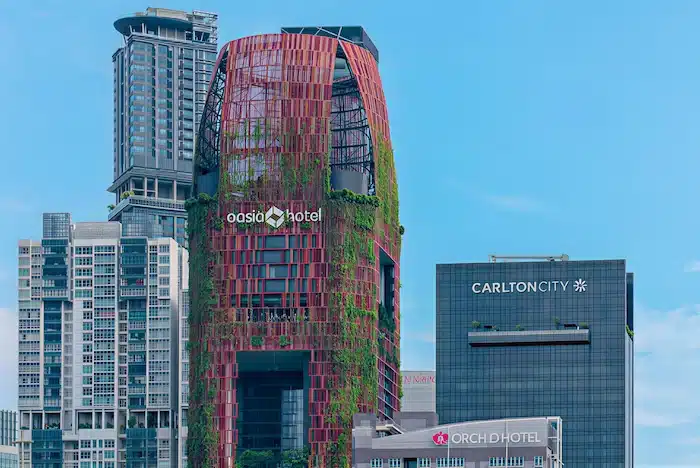
SunFrame’s aluminum curtain wall solutions can enable projects similar to Oasia Hotel Downtown — a high-rise living façade that combines aesthetics, ecology, and long-term structural performance.

Burj Al Mana Tower: The Story Behind Its Complex Façade and Engineering Rising over Doha’s West Bay, the Burj Al Mana Tower has a story

Every Detail Counts: Understanding SunFrame’s Product Pricing In the world of high-performance windows and curtain walls, every product has a clear cost logic behind it. At

How Spatial Utilization Drives Curtain Wall Selection —A Deeper Look into Light, Energy, and Space Introduction In modern architecture, curtain walls have moved beyond decoration

Smart Façades: AI-Driven Facade Design & Installation —Insights from SunFrame Projects Introduction As curtain walls grow more complex, AI is emerging as a transformative tool