Aluminum Panel Curtain Wall Construction | Technical Execution Guide
Aluminum Panel Curtain Wall Construction — Key Technical Points for Reliable On-Site Execution In real-world curtain wall projects, the facade functions as a secondary envelope.
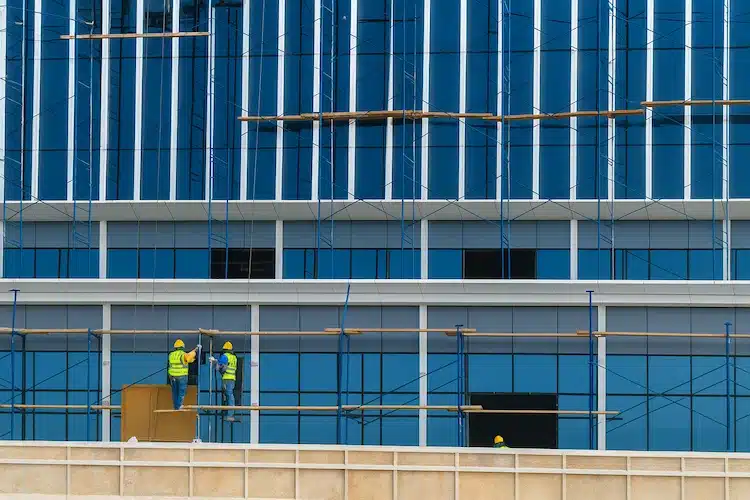
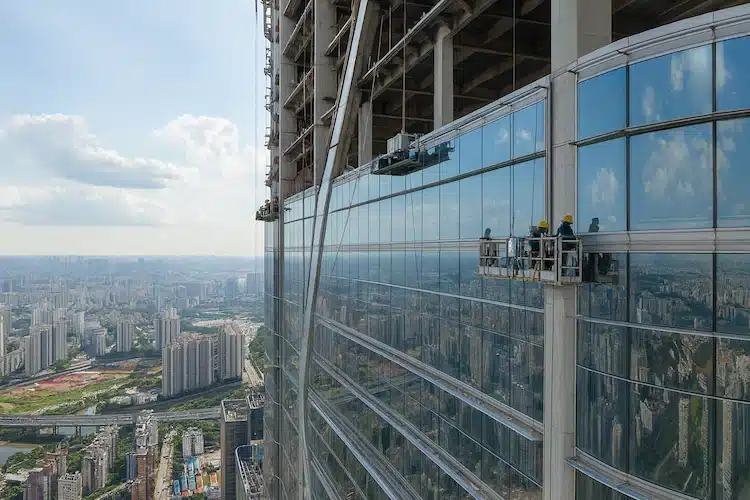
Can you imagine? In the early morning hours of New York, workers strap on their harnesses and then step out onto the scaffolding to begin work. For them, each pane of glass on the curtain wall is more than just part of a building. Also, it’s a crucial factor that determines whether they can stay safe and resilient. Like helmets, fall-arrest systems, safety ropes, things we take for granted today are actually the result of nearly a century of evolution in construction safety.
This Labor Day, we pause to pay tribute to the men and women who work at height, shaping our skylines one panel at a time.
In the next section, let’s trace back how safety protections in curtain wall construction have developed over the years.
In the 1930s, during the construction of the Golden Gate Bridge, safety nets were used on a large scale for the first time, and it saved 19 workers’ lives. However, protective measures were limited at that time. Thanks to OSHA regulations now firmly in place, curtain wall installers have the right to full protection, including harnesses, fall-arrest systems, guardrails, and non-slip platforms.
This evolution has dramatically reduced risks. At the same time, it enables modern curtain wall systems, especially unitized systems, to be installed more quickly and safely at great heights. Compared with just a few decades ago, today’s curtain wall projects truly balance efficiency with safety.
History shows us how worker safety in curtain wall construction has steadily evolved. But regulations don’t stop with protecting people—they also set strict measures to safeguard the curtain wall systems themselves.
In the U.S., particularly in union-led projects, the requirements for curtain wall materials and installation qualifications are exceptionally strict. To meet these demands, several key certifications have been established:
As a result of these developments, the curtain wall industry has become more transparent and disciplined. For suppliers, it means complying with both ASTM and AAMA standards as well as local regulations across states and municipalities.
Notably, SunFrame has earned recognition through several U.S.-recognized certifications, including ASTM E330/E283/E331, AAMA 2605, and NFRC energy efficiency certification. These credentials strengthen confidence in our systems for American projects. What’s more, they ensure curtain wall deliveries meet both union project demands and local government requirements.
With these standards forming the foundation, we can now look at the trends shaping curtain wall construction after Labor Day.
In the U.S., Labor Day often signals the start of the real building season. Crews return from summer breaks, permits are cleared, and job sites accelerate. For curtain wall projects, that means a few things become very clear on the ground:
♦ Prefabrication is king. Contractors prefer unitized curtain walls because they go up faster and cause less chaos on crowded sites.
♦ Compliance drives decisions. Union projects in particular will not move forward without proper certifications in place.
♦ Performance can’t come at the cost of design. Developers want façades that meet thermal targets while still standing out visually.
♦ Timing is everything. With multiple projects kicking off at once, the suppliers who can ship on schedule quickly rise to the top of the shortlist.
See what footprint SunFrame has left in the U.S.!
A good example of these trends in action is the LESSO Home project in Westbury, New York. Designed by Perkins Eastman and managed by Milrose Consultants, the three-story commercial building called for a façade that could handle New York’s strict building codes without compromising transparency.
SunFrame delivered a unitized curtain wall system, fully prefabricated in the factory to reduce onsite risk and keep the schedule predictable. The system withstood high wind loads while ensuring airtightness, insulation, and weather resistance—exactly what the codes demanded.
Just as important, our team worked shoulder to shoulder with the architect and contractor, adjusting details until both performance targets and design intent were achieved. In the end, we delivered nearly 3,800 m² of curtain wall on schedule, giving the building not just energy efficiency but also the bright, open façade the client envisioned.
This project highlights a growing reality: in the U.S. market, unitized curtain walls are becoming the system of choice after Labor Day, combining safety, efficiency, and performance.
Curtain walls are the gleaming face of modern buildings, but we must remember that behind the glass stand the workers who risk their lives to put them in place. It is their skill, courage, and persistence that have redefined the skylines of our cities.
This Labor Day, we honor them. And at SunFrame, we carry that spirit forward—by delivering U.S.-standard curtain wall systems that make installation safer, help our partners build more efficiently, and keep buildings shining for years to come.

Aluminum Panel Curtain Wall Construction — Key Technical Points for Reliable On-Site Execution In real-world curtain wall projects, the facade functions as a secondary envelope.

Photovoltaic Glass Applications in Building Systems Across Regions —From Southeast Asia to the Middle East Photovoltaic technology is shifting from external power equipment to an

Shaping Al Mana’s Architectural Identity: From High-Rise to Headquarters Introduction From the soaring towers of Doha’s skyline to the intimate spaces of its corporate headquarters,

How SunFrame Develops Overseas Markets: Starting from Being on the Ground “Understanding local realities before defining system solutions” In developing overseas markets, the real challenge